Ethiopian black seam
Not all dark opal comes from Lightning Ridge. Ethiopian black seam opal is its own thing.
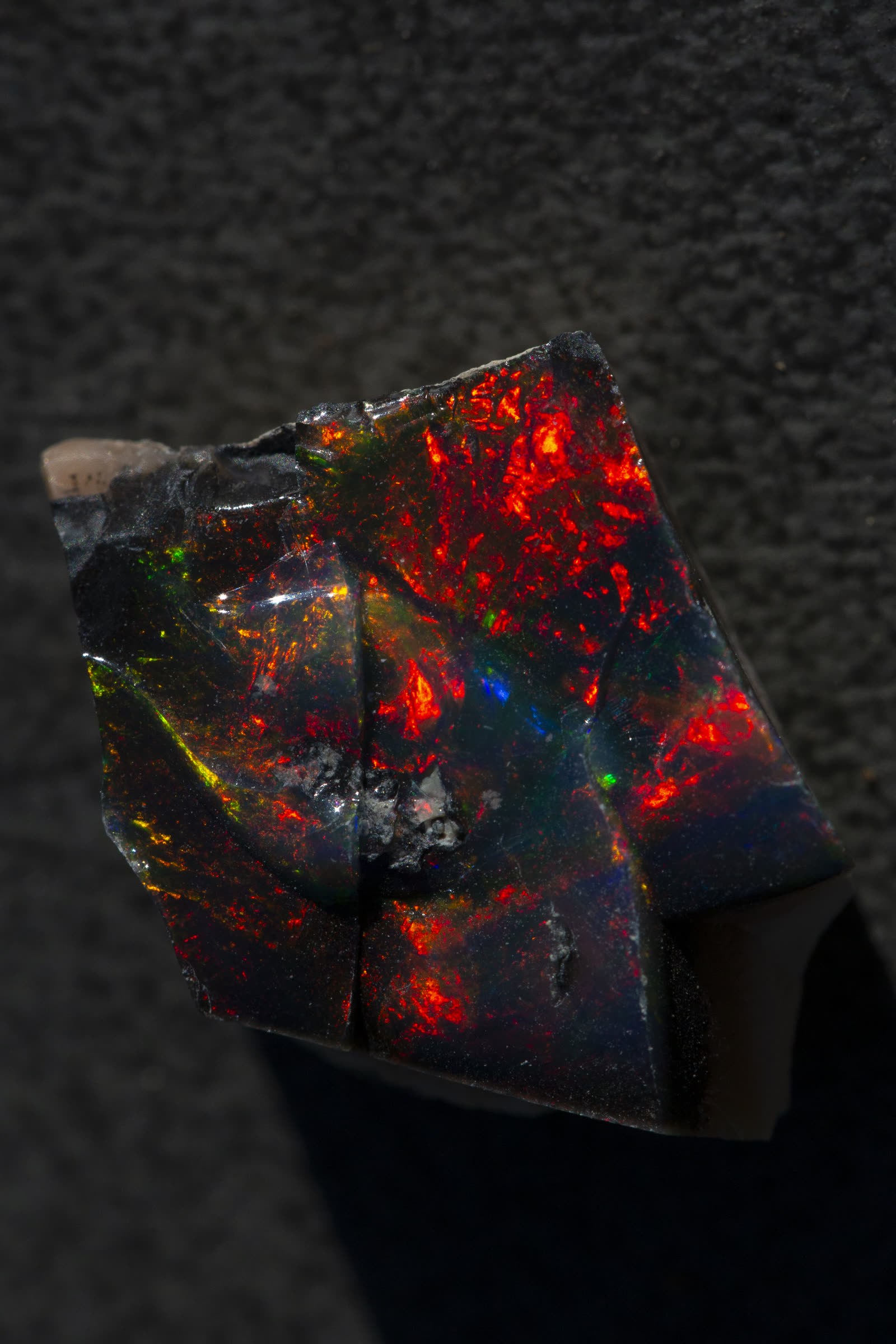
When most people think of black opal, they think Lightning Ridge — the dark sedimentary ironstone body, the rolling flashes of color. Ethiopian black seam is different material, different origin, same striking result: a near-black body that makes the play-of-color look like fire in a darkened room.
The dark body in Ethiopian black seam comes not from the host rock but from the opal itself — a concentration of trace elements and deposition conditions during formation that produced a naturally dark base. The fire on top of that dark ground reads brighter than it would in a lighter stone. Red looks redder. Orange looks molten. Green goes electric.
Why the dark body matters
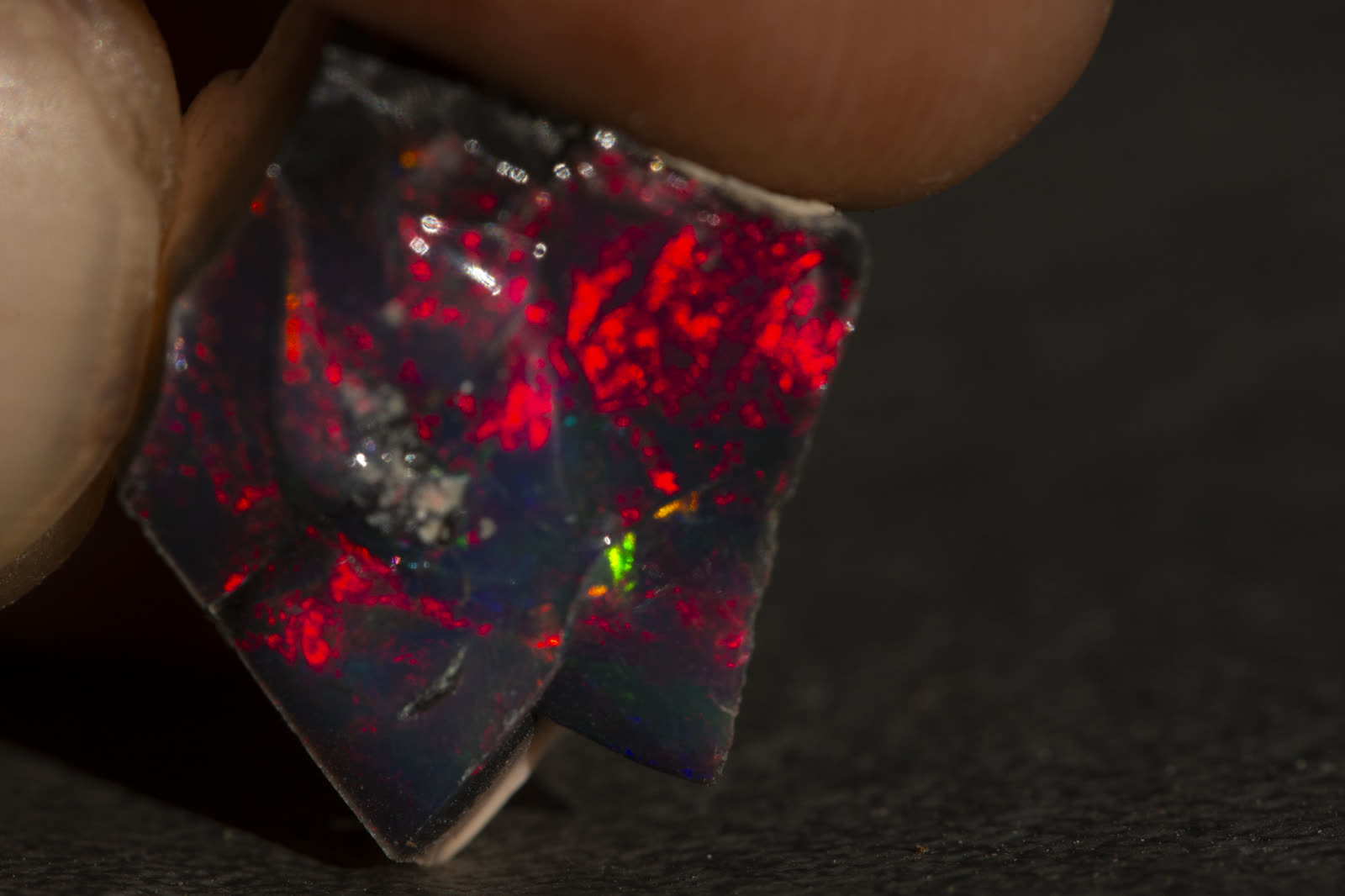
Play-of-color in opal is produced by the diffraction of light through a regular lattice of silica spheres. That process happens the same way regardless of body tone. What the body tone changes is the contrast — how much the color pops against its background. A black or near-black base absorbs the light that isn't diffracted; nothing bounces back to compete with the color. White or crystal opal scatters that light back, which dilutes the effect. The darker the body, the more vivid the play-of-color appears, all else equal.
This piece is still rough. The surface shows what the color is doing but the full picture comes out after preforming — when you can see how the color bar runs through the stone, whether it's consistent or patchy, and what the final cab will look like. The fire this rough shows in the photos is the floor, not the ceiling.