Koroit
Boulder opal from Queensland's ironstone country — where the matrix is the point, not the inconvenience.
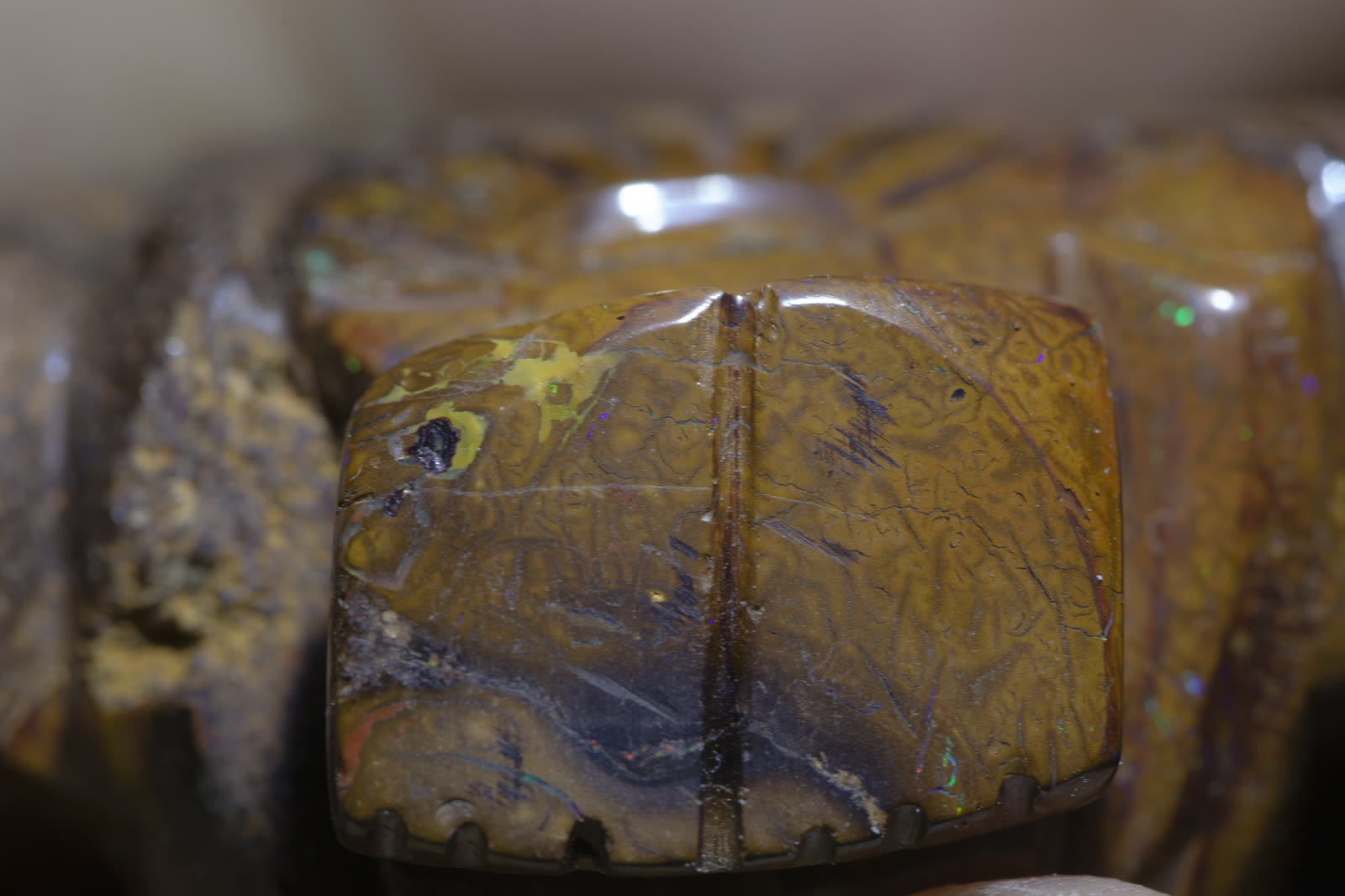
Boulder opal is cut and sold with the host rock still attached. The ironstone backing isn't a flaw to be removed — it provides structural support that lets thin opal layers survive cutting that would fracture if freed from the matrix. The dark ironstone background also acts as a natural body tone enhancer: the play-of-color reads against a dark ground even when the opal layer itself is light-bodied.
Koroit specifically comes from the Koroit opal field in southwest Queensland — different from Lightning Ridge in both geology and character. Where Lightning Ridge forms large, even color bars in sedimentary clay, Koroit opal infiltrates cracks and voids in hard ironstone. The result is the web-like, branching pattern in the slabs above: thin veins of color through dark matrix, following the fracture network of the host rock rather than forming clean seams.
The cutting approach
You don't try to cut Koroit free from its matrix — the opal is the network, not a separable layer. The finished cab is ironstone with opal inside it, and the shape follows the vein pattern rather than the cutter's preference. Good Koroit cabs have organic, irregular outlines because the cutter is exposing what's already there, not imposing a shape. The matrix is structural, aesthetic, and part of the identity of the stone.