Smoked Ethiopian: what it is and how to spot it
One of the opal market's most common frauds. Here is how it works and how to test for it.
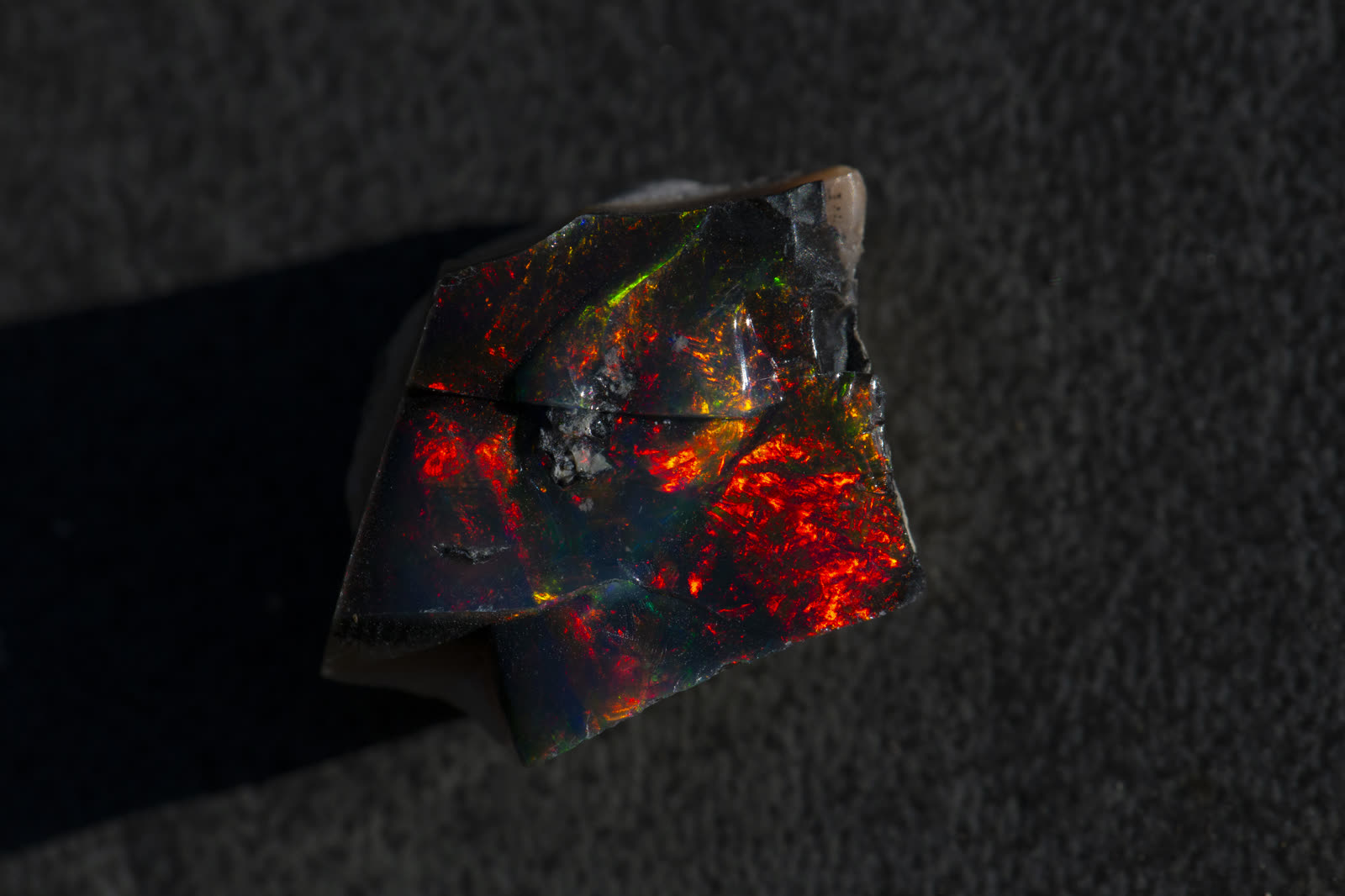
Ethiopian opal from the Welo region is hydrophane — the silica structure has open micro-pores that absorb liquid. That same property makes it vulnerable to a specific type of fraud. Rough light-body Ethiopian opal is wrapped tightly and exposed to smoke from burning organic material. The carbon particles infiltrate the pore structure and darken the stone from light to near-black. The result looks like a dark-body opal. The price difference between a good light Ethiopian and a convincing dark-body stone is enough to make this commercially worthwhile.
Smoked material has reached the market in quantity, particularly in loose stones sold at lower price points. It is not always obviously fraudulent — a well-smoked stone with strong play-of-color can look like legitimately valuable material to a buyer who does not know the test.
The water test
Immerse the stone in clean water for a few minutes and watch what happens. A smoked stone loses most or all of its dark appearance as the water displaces the carbon in the pores. The body becomes lighter or nearly transparent. Remove and dry — the dark color returns as the water outgases and the carbon settles back into the pores. A naturally dark-body Ethiopian does not change in water. The darkness is structural, in the crystal, not in the pores.
A second check: rub the stone gently with a soft white cloth before the water test. Smoked material sometimes releases visible carbon residue on the cloth surface, particularly on the girdle edge or in any surface irregularities. The darkening is near-surface and mechanical, not in the crystal structure. A natural dark-body stone produces nothing on the cloth. Both tests together are reliable enough to make a purchase decision.