The opal that drinks water
Ethiopian Welo opal is hydrophane — it absorbs water, and the color goes flat when it dries out. Here's what that actually means.
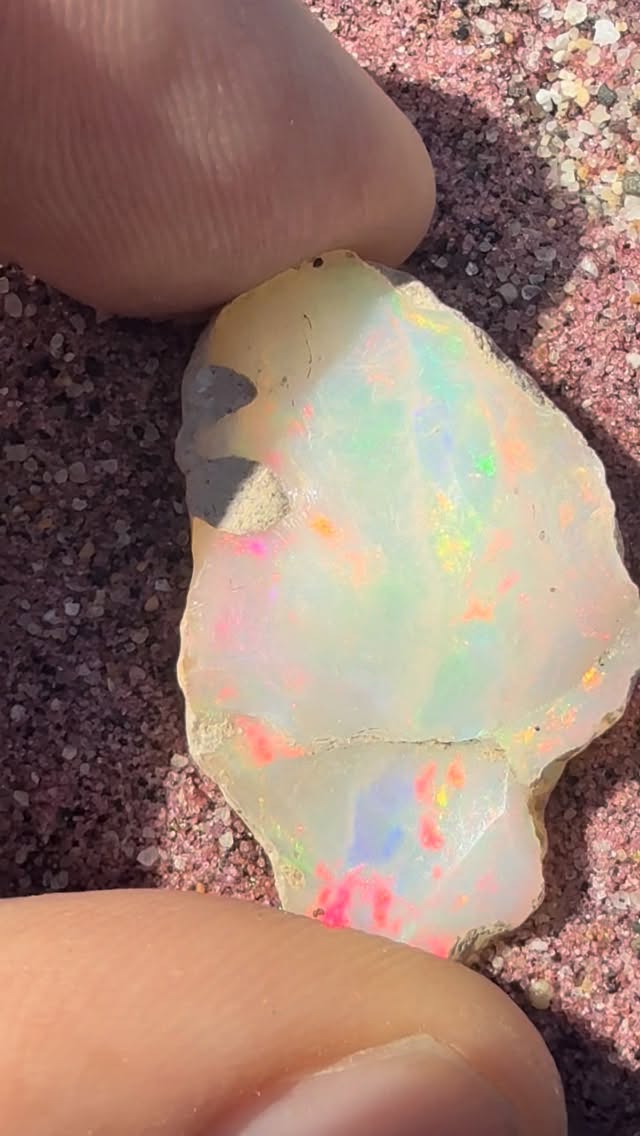
Ethiopian Welo opal is often hydrophane — from the Greek for 'water-appearing.' The silica structure is micro-porous, meaning it can absorb water. Dry it out completely and the color goes flat, sometimes almost milky white. Wet it and the fire comes back.
Here's the tell: press a dry Ethiopian opal against the inside of your wrist or your lower lip. If it sticks, it's hydrophane. It's drawing moisture straight out of you. The color that fires through the contact point is exactly that phenomenon — water filling the gaps between the silica spheres that produce play-of-color.
Why this matters for care
The same porosity that makes Welo opal so alive is also what makes it absorb the wrong things. Plain water is fine. Oils, soaps, hand lotion, and chemical cleaners can infiltrate the pores and stain the stone permanently — not temporarily, not reversibly. Take Ethiopian opal rings off before applying anything.
An Ethiopian opal that looks dull or washed-out after sitting in a dry room usually just needs water. Run it under cool water for a minute. Most of the time the color returns completely. If it doesn't — if it looks permanently off — that's oil or chemical contamination, not simple dryness.
How this differs from Virgin Valley
Virgin Valley fire opal is unstable in a different way. It doesn't lose color when it dries — it cracks. The craze risk is why serious Virgin Valley specimens live in water domes or sealed containers. Ethiopian hydrophane is more forgiving about humidity changes; what it can't handle is chemicals and hard knocks.
The stone in the photo above is rough Ethiopian Welo — that translucent, glassy body is the tell. Most people expect opal to look solid. Welo lets light through it the way a glass of water does. Wet it and the color deepens; let it dry and it flattens out. That back-and-forth is what hydrophane means in practice.