The opal fields of Australia
Lightning Ridge, Coober Pedy, Andamooka, the Queensland boulder fields — a map of where Australian opal comes from.
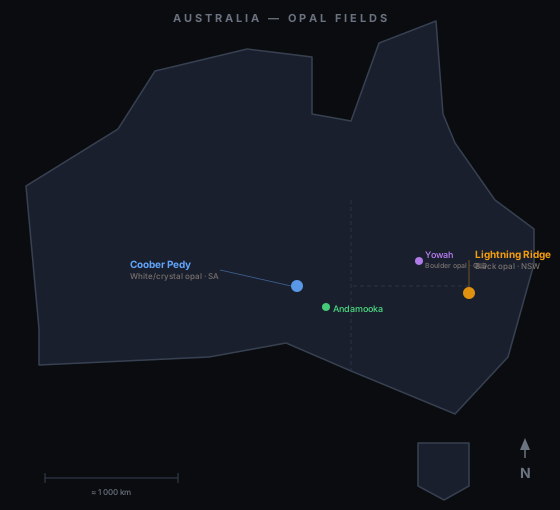
More opal comes out of Australia than anywhere else. The fields span two states and produce material that does not much resemble each other — different geology, different host rock, different stability profiles, different looks.
Lightning Ridge in northern New South Wales is the source of most black opal. The material forms in cretaceous-age sedimentary layers — ancient inland sea beds — in ironstone country. The dark host rock contributes to the N1-N4 body tones. Lightning Ridge black opal sets the global price benchmark for the category. The town is small, remote, and built almost entirely around mining.
South Australia and Queensland
Coober Pedy in South Australia produces the largest volume of opal in the world — mostly white and crystal, the material used in the majority of commercial jewelry. The town is famous for underground homes dug into the hillsides to escape the desert heat. Andamooka is a few hours northeast of Coober Pedy in the same state, producing similar white and crystal opal with more matrix material in the mix.
Queensland's boulder opal fields — Yowah and the Koroit area — produce a third character entirely: opal in hard ironstone host rock, cut matrix and all. The branching vein patterns of Koroit material and the ironstone-hosted crystal of Yowah are distinct from anything produced in New South Wales or South Australia. All three regions are on the map above.