Dopping: how to mount a stone for grinding
Before you grind a cab, you need to hold it. Here is how dopping works and why the alignment matters.
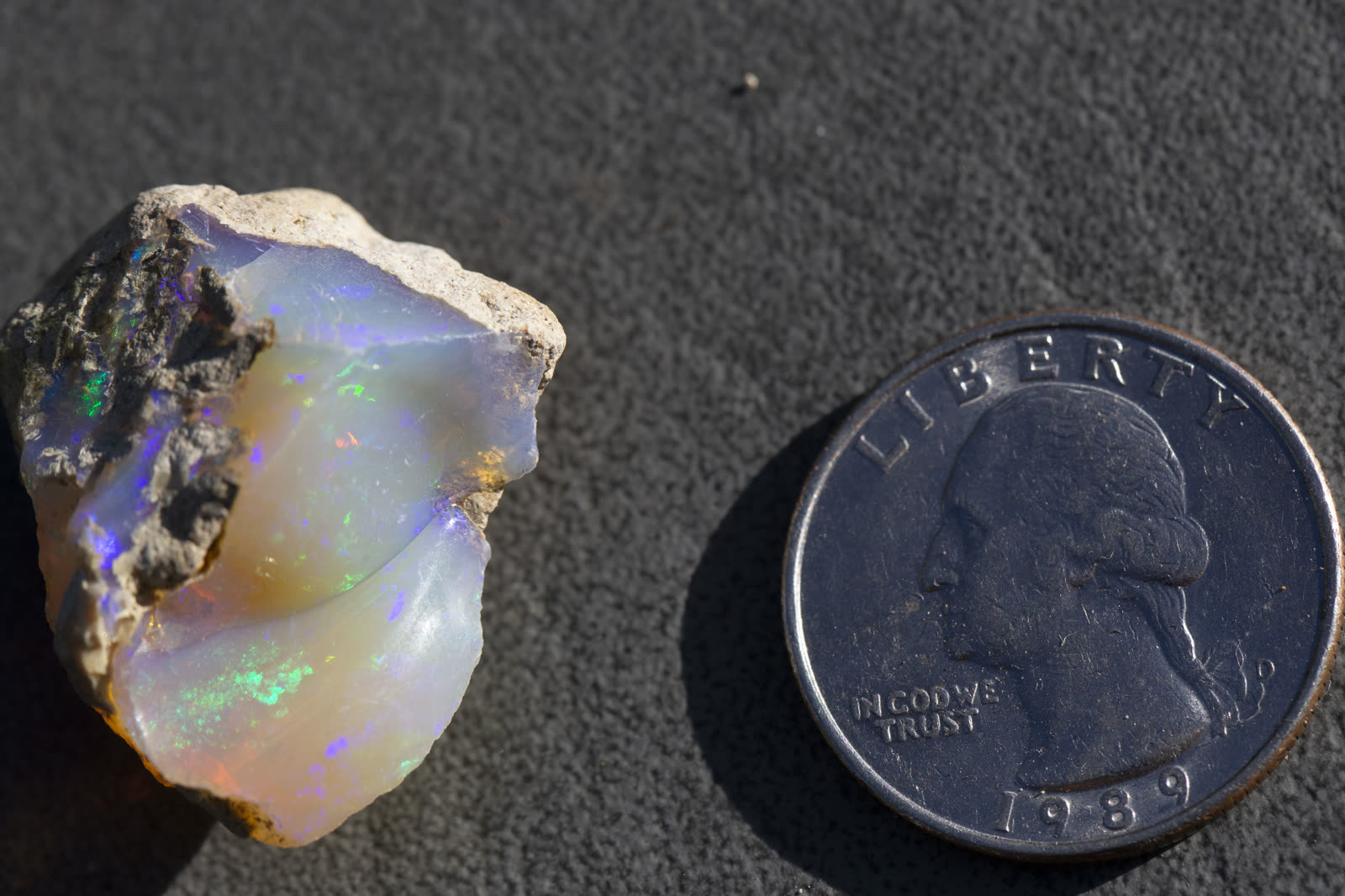
A dop stick is a metal or wooden rod — usually aluminum — that gives you a handle for a piece of rough during grinding. Without a handle, controlling the stone against a wheel is impractical. Dopping is attaching the stone to the stick with thermoplastic wax before any grinding begins.
The wax is heated until soft with an alcohol lamp or a dedicated wax pen. Warm wax is applied to the end of the dop stick, and the stone is pressed into it while the wax is still pliable. Hold it still while the wax cools and hardens — the stone must not shift position during this. The alignment at this stage is the critical decision: the angle of the stone relative to the stick determines the dome orientation you are going to grind. If the color bar needs to run parallel to the finished girdle, set that angle in the wax now, before the first wheel pass.
Getting the stone off
After grinding is done, the stone needs to release from the dop. Two methods: rewarm the wax gently until it softens and the stone releases, or briefly freeze the dop — the thermal contraction usually pops the stone free without any mechanical twisting. The goal either way is to avoid torquing or prying the stone, which risks damaging a polished surface or cracking the opal.
Transfer dopping is used when both sides of a stone need to be worked. The stone is mounted on a second dop while still attached to the first, held in careful alignment, and then the first dop is removed. This lets you finish the bottom or girdle of a stone after the face is already polished. Useful for calibrated work where the girdle geometry matters.