Freeform or calibrated: which shape to cut
A calibrated cab fits any standard setting. A freeform follows the stone. Here is how to decide which one the rough is asking for.
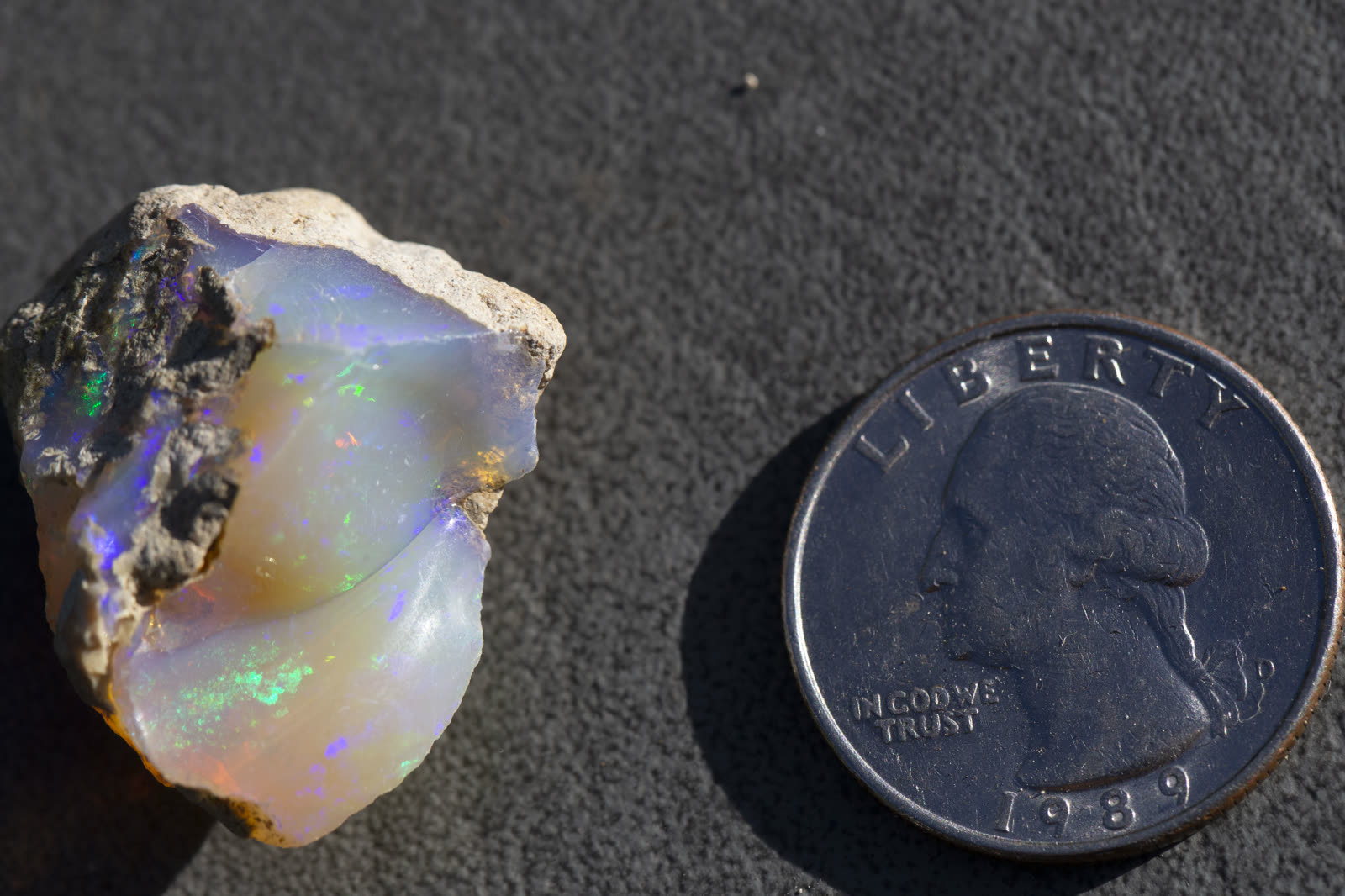
A calibrated cab is cut to a standard size — a 6x8mm oval, a 10mm round, a 10x14mm — that fits commercially available settings. The advantage is interchangeability: the stone can go into a ring casting, a premade bezel, or a standard commercial mounting without custom work. The constraint is that you are cutting to a size specification rather than following the material.
A freeform cab follows the rough. The outline is determined by where the color bar runs, where fractures sit, and what shape gets the most color-bearing material into the finished stone. A freeform can be any shape — loose oval, irregular, wider on one end. The advantage is decisions made for the stone, not for the setting. The constraint is that the setting approach has to accommodate whatever shape comes out.
When calibrated makes sense
Calibrated makes sense when the setting exists before the stone does — a ring that's already been cast, a standard bezel that's been ordered, a customer who needs a specific size. It also makes sense when the rough will yield a calibrated size without sacrificing significant color. If the color bar runs conveniently to a 10x14mm oval and there is no dead zone being included, calibrated is the practical choice.
Freeform makes sense for most opal, especially high-value material where every millimeter of color-bearing rough counts. Forcing an irregular color bar into a standard oval outline usually means cutting off fire at one edge to hit the geometry. On the best pieces — where the color runs through the rough in an unusual shape — freeform is not a compromise. It is the right choice.