Gray body, full fire
The gray-bodied Ethiopian crystal opal that doesn't photograph the way it looks in hand.
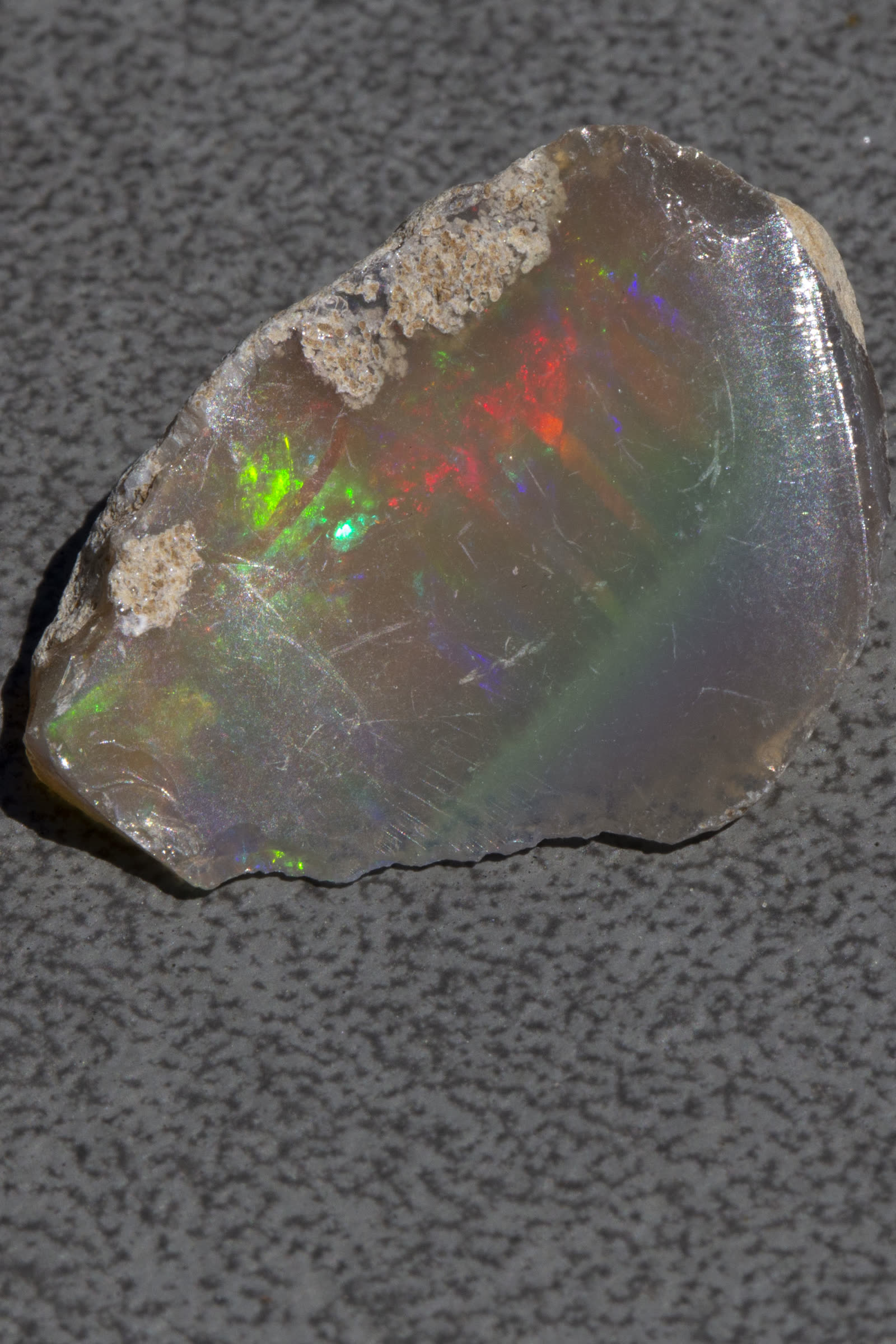
Gray body tone in opal sits between crystal and white — not fully transparent, not white, not dark. The body has depth to it; light enters but the stone doesn't glow the way crystal does. The play-of-color shows up crisply against that neutral ground, without the warmth a honey body adds or the vibrancy boost a black body gives.
This piece from the June session shows what gray body Welo can look like at its best: the red and green fire is vivid even against the neutral body. It photographs slightly muted compared to what you see in hand — the camera catches a single moment in a specific light; the human eye picks up more of the color movement as the stone shifts. That gap between photo and reality is bigger with gray body than with black or crystal.
What the scratches tell you
The surface scratches visible on the face aren't damage — they're part of how rough opal looks before it's preformed. That scratched, rough-polished surface is often how miners initially check a piece: rough the face enough to see through it, look at the color, decide if it's worth processing further. The rough polish confirms the color is real and gives a rough read on the color bar orientation. This one has both.