The honey body
Body tone in opal is usually talked about on a black-to-white scale. Then there are the ones that don't fit the scale.
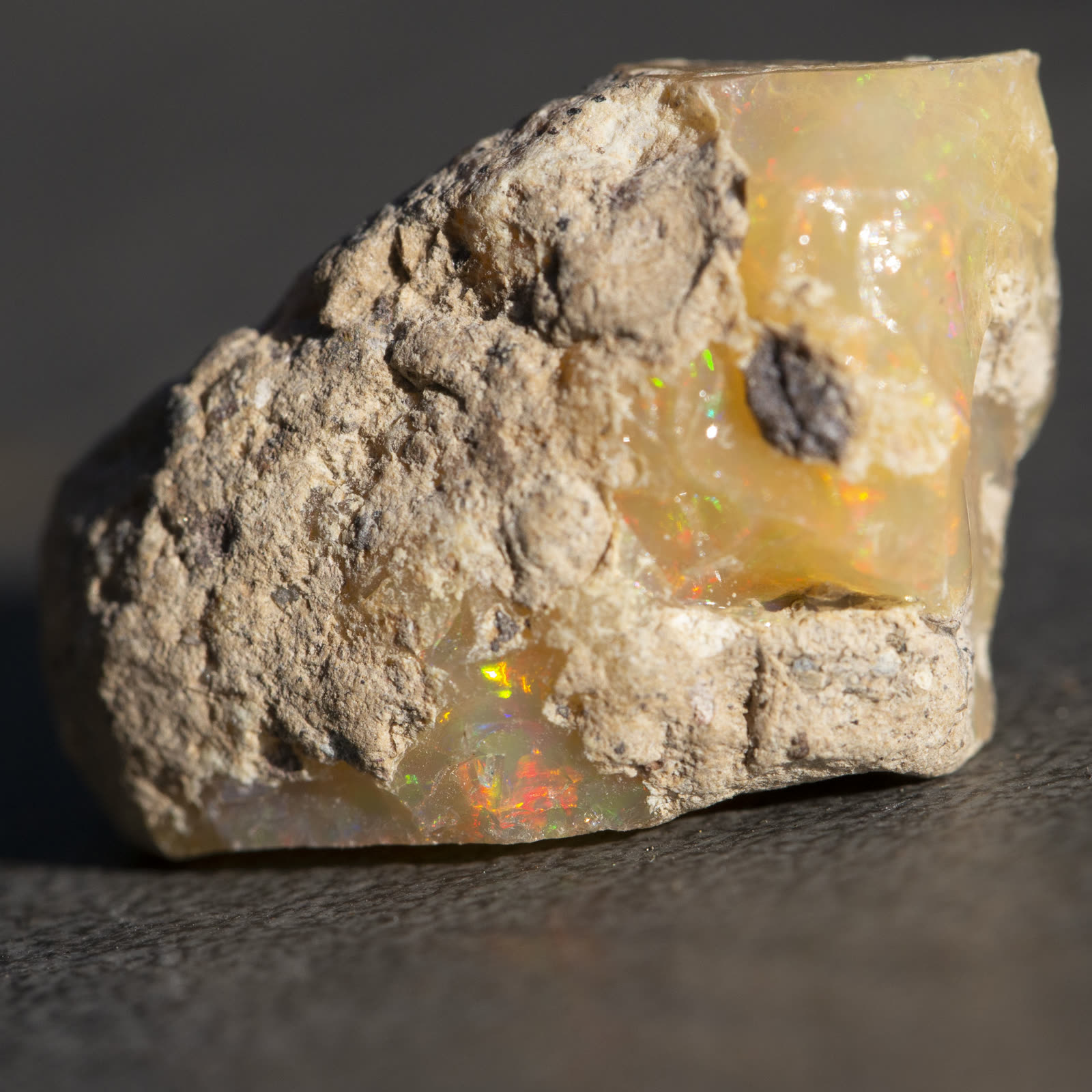
The standard body tone scale for opal runs from N1 (jet black) to N9 (white). Most of what you see described is one of those — black, dark, mid-grey, light, white. The honey pieces don't sit neatly on that scale. The body isn't white or black; it's warm, amber, golden. The fire that comes through it picks up the warmth of the body and reads differently than it does in a clear crystal or white stone.
Ethiopian Welo produces honey body material when the silica has a slightly different internal structure — fewer voids, slightly different deposition chemistry. The result is a warm, almost glowing base that makes yellow and orange fire in particular look extraordinary. Red is still red. Blue tends to go slightly warmer. The overall effect is richer, more saturated, less icy than the same play-of-color in a white stone.
The cutting decision
Honey material like this one is still mostly in matrix. The question before cutting is whether the color runs all the way through or is concentrated in a specific zone. On this piece the fire is visible peeking out at the edges — which suggests the color bar continues inside. How thick it is determines whether it becomes a round cab, a freeform, or just rough on the shelf.