Opal care: the actual list
Twenty-plus years of answering the same question. Here's what you actually need to know — and the one thing that will definitely damage any opal.
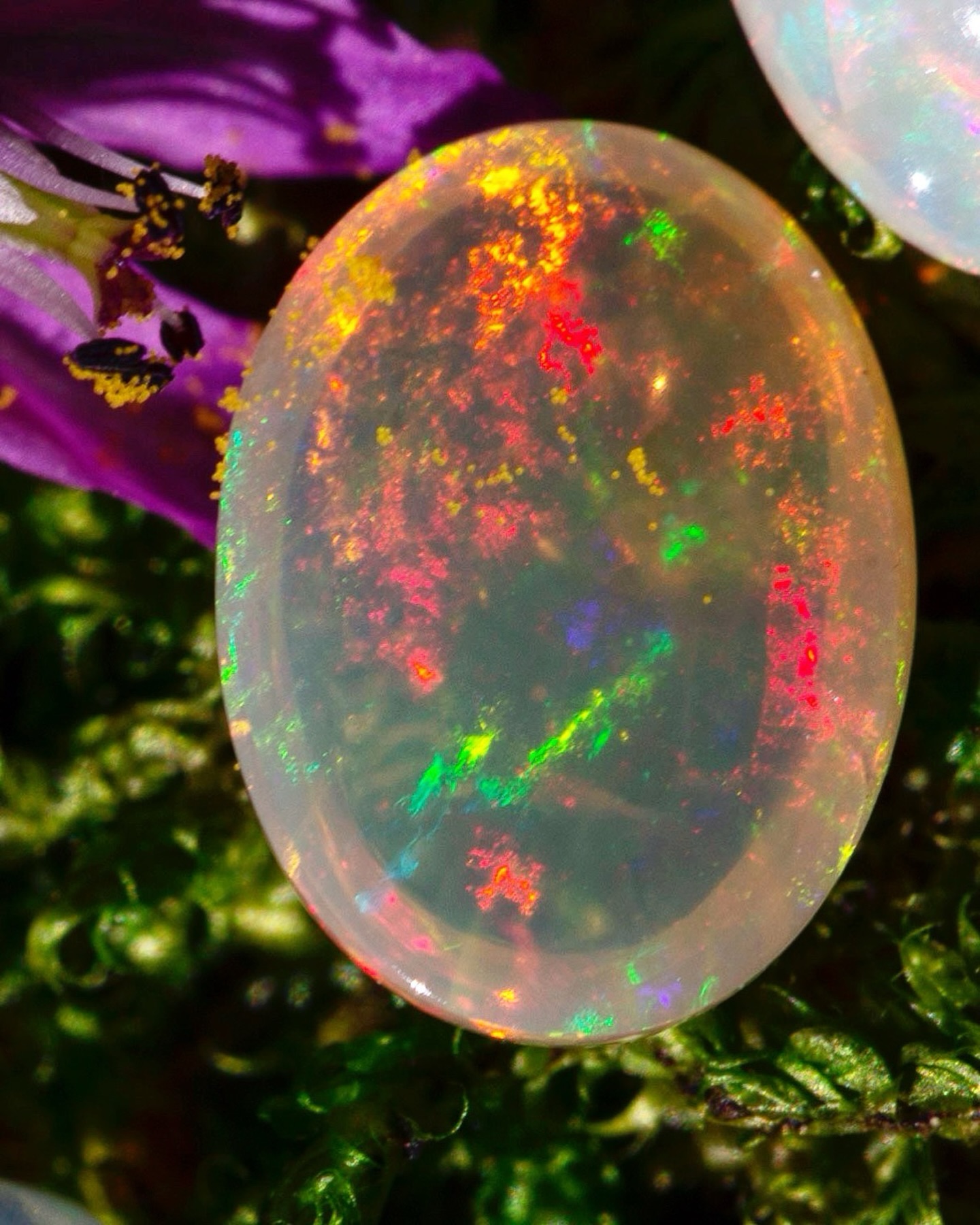
The question we get more than almost any other: how do I take care of this? After twenty-plus years of selling opal — and a lot of damage we've seen and heard about — here's the honest list.
Opal runs around 5.5–6.5 on the Mohs hardness scale. Harder than you might expect for something that holds water in its structure, but softer than most faceted gems. It scratches if you're careless. That's the starting point for everything else.
What to do
Wipe with a soft, damp cloth. That handles most of what comes up. Store pieces individually — opal against opal, or opal against a harder stone, will scratch both. Remove jewelry before gardening, the gym, or anything abrasive.
What not to do
No ultrasonic or steam cleaners. Ever. The vibration can fracture a stone, and steam drives water in and out of hydrophane Ethiopian material faster than it handles well. This causes the most damage we hear about from buyers.
No solvents, acetone, bleach, or commercial jewelry cleaners. These can infiltrate the micro-pores of Ethiopian opal and stain them permanently — not temporarily, not reversibly. If you wear Ethiopian opal rings, take them off before applying hand cream or sunscreen.
Don't leave any opal in direct strong sunlight for extended periods. The heat pulls out moisture faster than the stone handles gracefully — especially relevant in dry climates.
Virgin Valley material is different
Our Virgin Valley fire opal is a separate situation entirely. These stones equilibrated to moisture over millions of years in wet volcanic clay. A sudden dry spell can cause them to craze — develop fine surface cracks. Pieces we sell from there have been dried slowly and watched for months before they leave the bench. Keep them away from prolonged heat; a sealed container or water dome is the safest storage.
Doublets and triplets
If you have a doublet (a thin slice of opal glued to a dark backing) or a triplet (same, with a crystal cap on top), don't soak them. Water gets into the adhesive and can separate the layers. Wipe only, never submerge. Solid opal — what we cut here — is the most forgiving of the three.