How to read rough
Before a cut happens, there's a longer process. Here's what twenty years of lapidary work looks like in the evaluation stage.
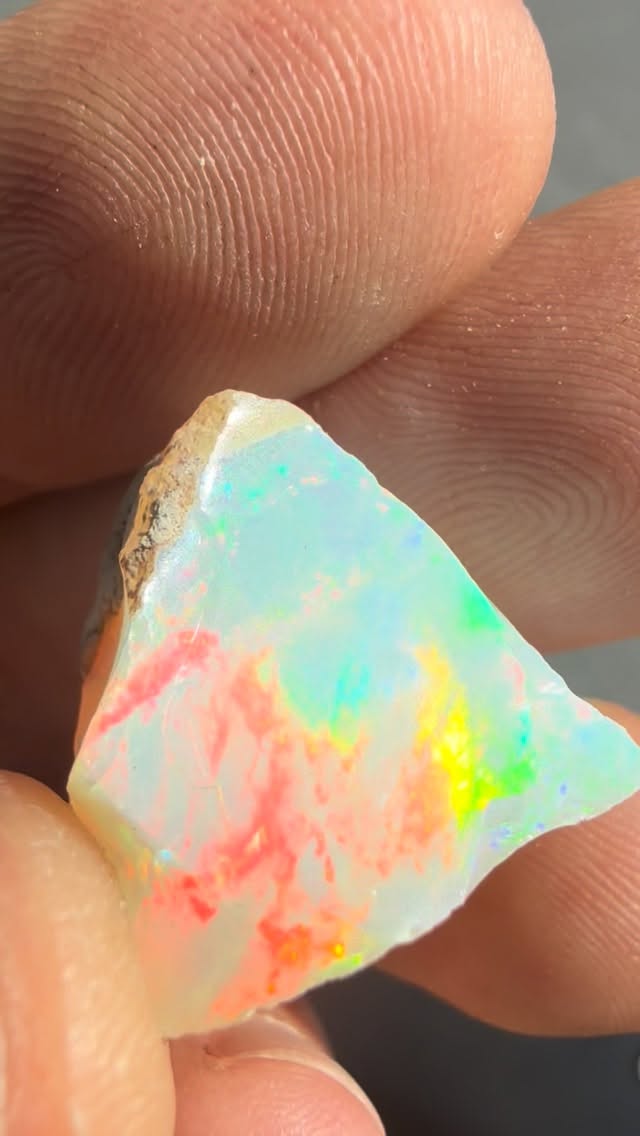
Before a cut happens, there's a longer process: reading the stone. Most rough arrives as a sandy, opaque lump — nothing like the finished piece it might become. Knowing what's inside before the wheel touches it is most of the work.
First step: wet it. Water fills the surface scratches and lets you see past the rough exterior. Most of the real evaluation happens with a wet stone held under a single bright light, slowly turned.
What we look for
Color bar orientation. The play-of-color in an opal lives in a layer called the color bar. If the bar runs parallel to the face you're looking at, you dome over it — that's a cab. If it runs at an angle, you have to figure out which face gives the best presentation, or whether the piece is worth cutting at all.
Bar depth. How thick is the color layer? A thin bar means less room to dome, less visual punch, and a higher risk of cutting straight through to potch on the wrong pass. Good rough has a thick seam of color with potch on both sides.
Fractures. A crack that stays in the potch layer might grind away before you reach the color. One that cuts through the color bar is a problem — on the wheel or later under the stress of wear.
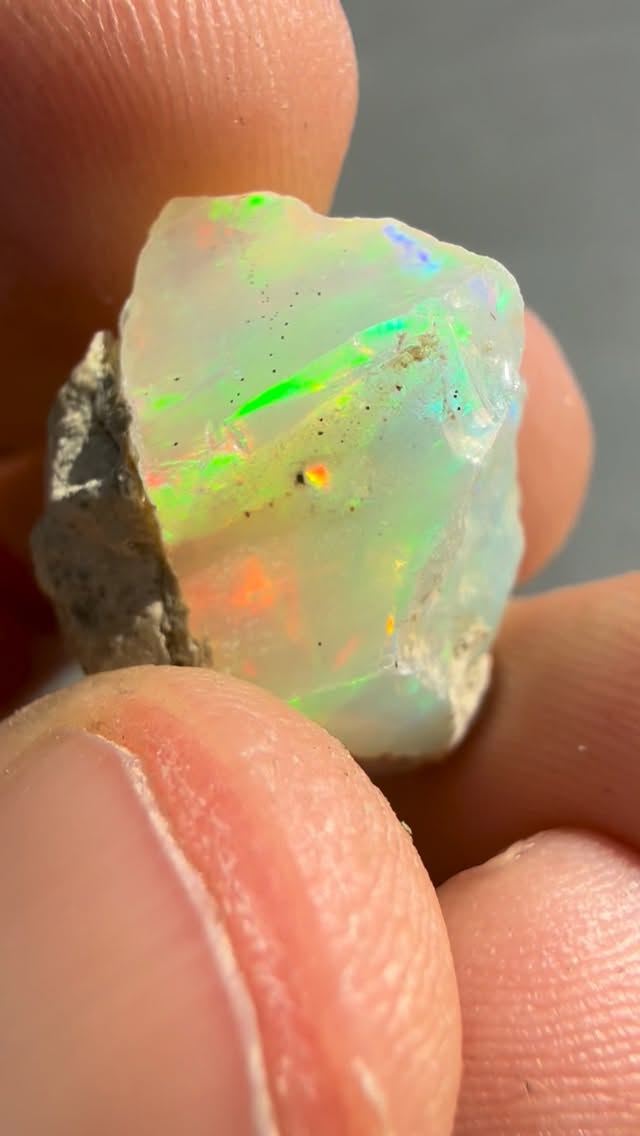
Every cutting session starts with a reject pile. Finding out a piece won't work before the wheel touches it is the point.