How Virgin Valley opal is mined
The opal is in bentonite clay, not hard rock. Here is what a day of digging looks like on the claim.
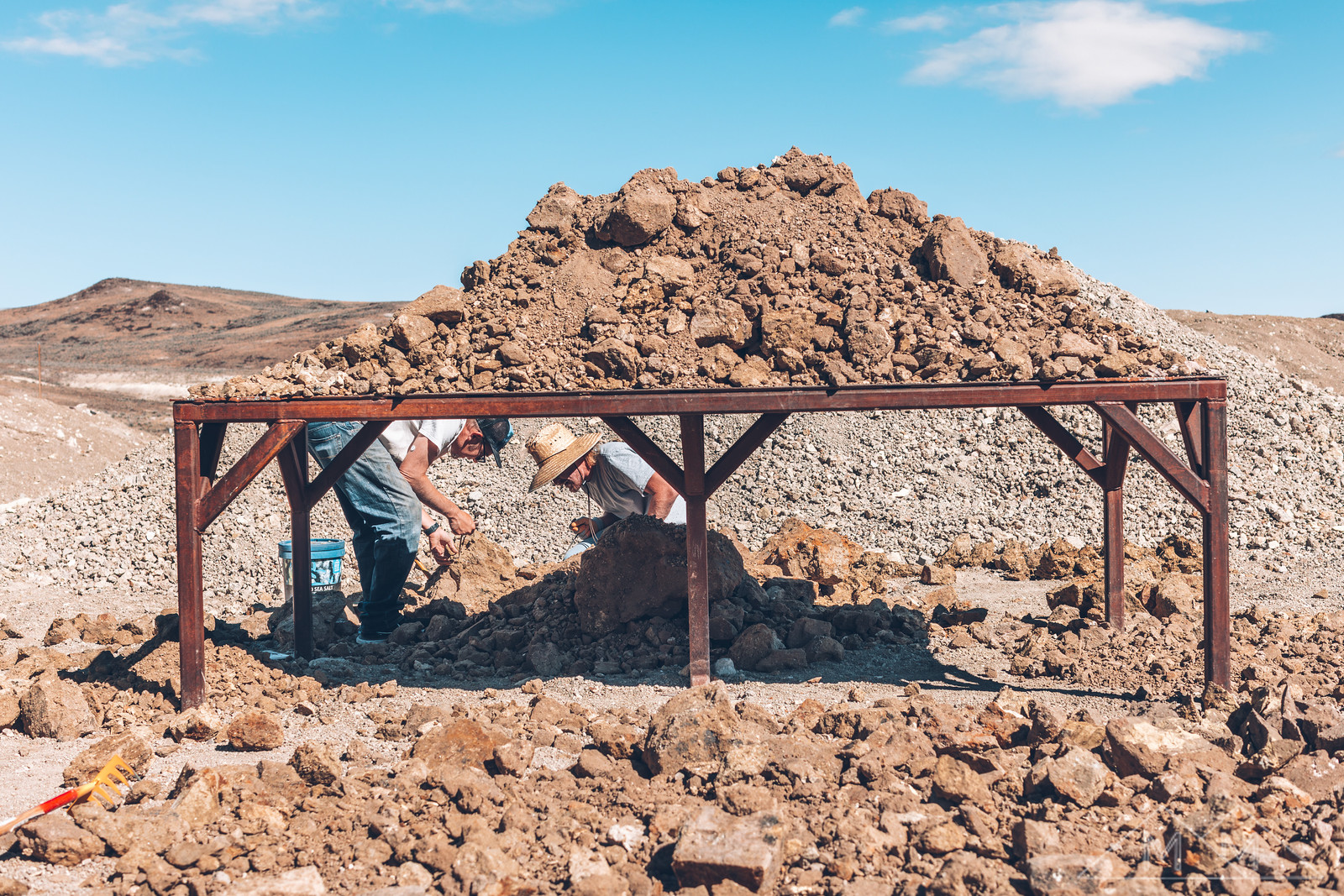
Virgin Valley opal forms in volcanic ash layers embedded in bentonite clay. The opal is in the clay, not in hard rock, and that changes every aspect of how the material is extracted. There is no drilling, no blasting. You are moving clay — slowly, by hand, face by face.
The approach on our claim is hand-tool work along the ash layer where opal appears. Mattocks and small shovels expose the face; narrow picks and hand tools work along the productive zone. Bentonite moves well when hydrated but gets dense when dry. Water matters in two directions — it keeps the clay workable and keeps any opal you find hydrated from the moment it leaves the deposit.
What you are looking for
A flash of color in wet bentonite is the signal — sometimes just a flicker at the edge of the clay, sometimes a full color bar visible in the face before you have freed the piece. The material is fragile at this stage. Fresh opal from the deposit is carrying full moisture and has no structural reinforcement from drying or stabilization. Pieces go directly into containers of water. You do not leave a fresh find in air.
The volume ratio is what it is. On a productive trip you move tens of kilos of clay for every gram of opal recovered. On a slow trip the ratio is worse. The deposit is generous intermittently, not continuously. The pile in the photo above represents a full day of work. Most of what is in it is not opal.