When the stone tells you the shape
With a cab, the cutter decides the shape. With a carving, the color bar gets a vote.
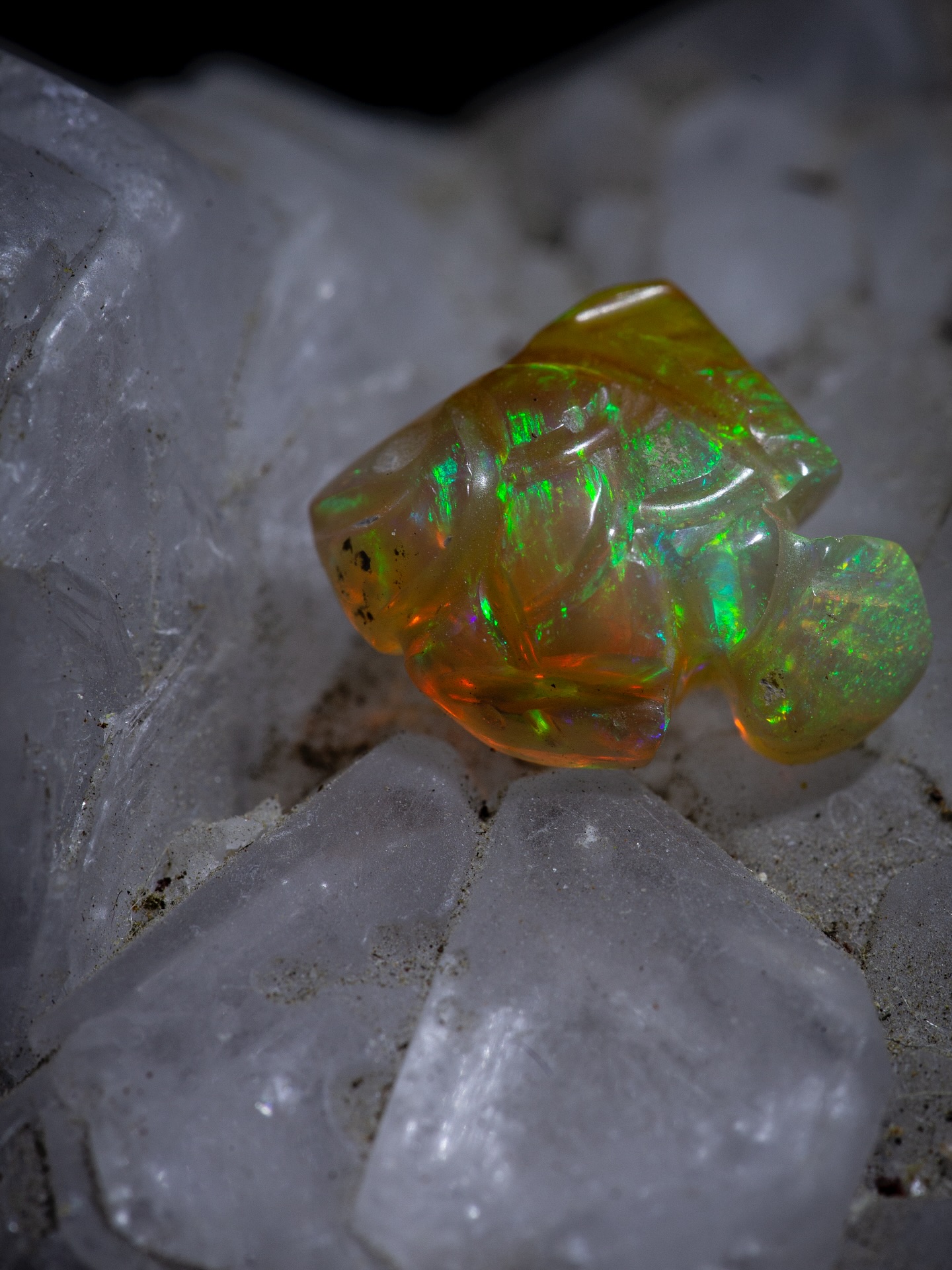
Most cabs come off the bench because the cutter decided what shape to cut. Carvings work differently: the stone gets more of the vote.
You can't facet an opal the way you'd facet a sapphire. The color lives in a layer, and straight facets cut through that layer and scatter the play-of-color rather than directing it. A cabochon domes smoothly over the color bar and points the fire toward a viewer. But the color bar isn't always flat — and that's where carving opens up.
Following the color
The turtle in this photo started as a rough Ethiopian chunk with a color zone that ran diagonally through the piece — not flat enough to cab cleanly without losing most of the fire. We could have cut around the color and lost it, or built a form that followed where the fire actually was. The shape came from the stone.
Diamond burs at multiple grits, water-cooled throughout. Opal heats up fast and can crack if you push the speed — you spend more time watching than cutting. The green and red fire running through the body of the carving isn't placed there. That's where it was in the rough.
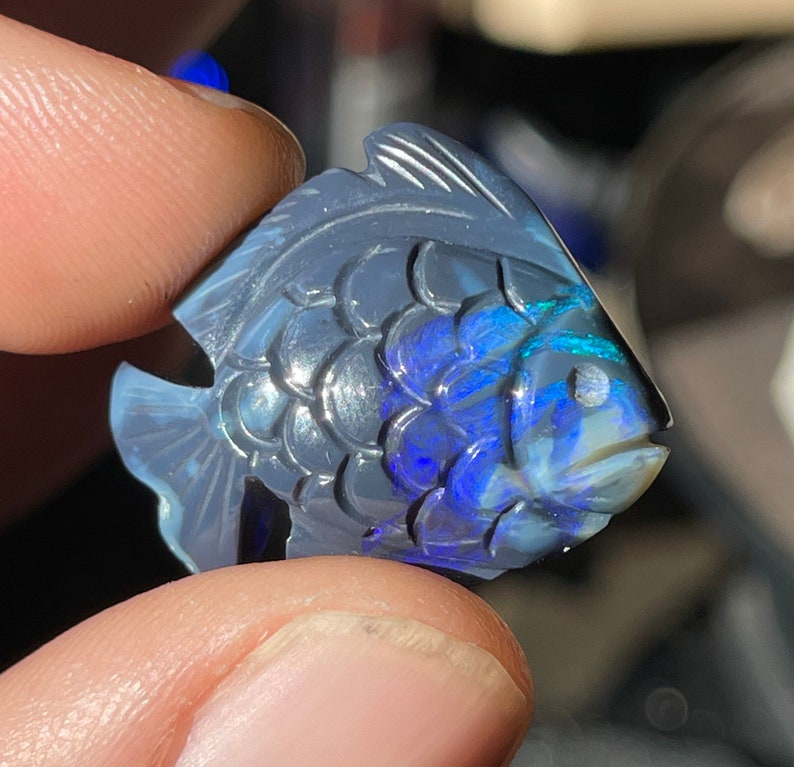
Every carved opal is a one-of-a-kind, same as every cab. But carvings make that impossible to argue with.