What size means in opal
Carat weight tells you less about opal than it does about almost any other gem. Here's what matters instead.
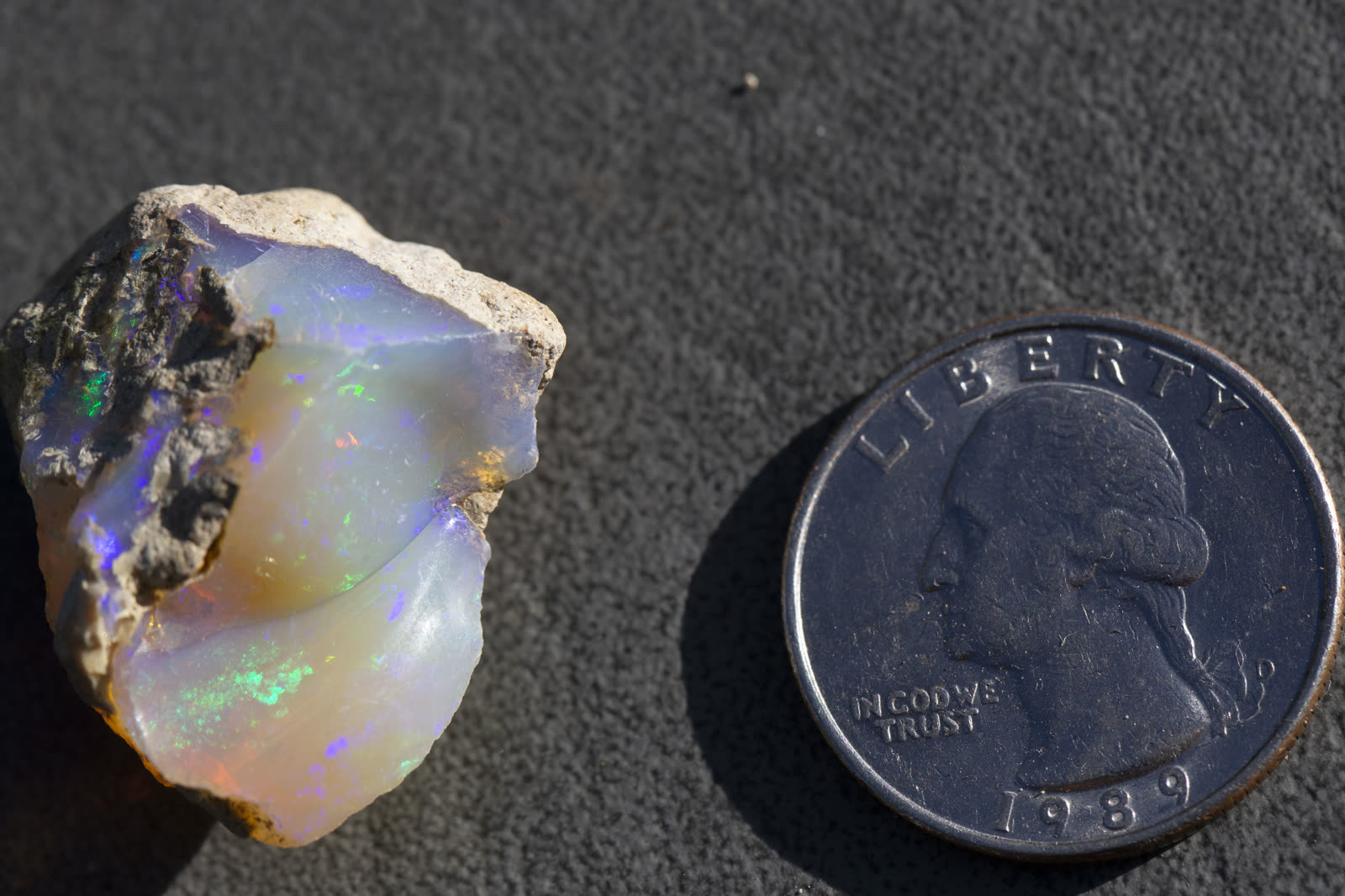
Opal doesn't have a standard density. The density varies by type — Ethiopian crystal is less dense than Australian material, boulder opal includes ironstone host rock in the weight. A 5-carat Ethiopian crystal cab and a 5-carat black opal cab are not the same size. Carat weight in opal doesn't translate to face size the way it does in diamond, where the proportions are standardized. The quarter in the photo above is there because physical size is more informative than the number on the scale.
For opal buyers, face size and play-of-color coverage matter more than total carat weight. A 3-carat cab where the color runs edge to edge across the full face is more useful in a pendant or ring than a 5-carat cab with dead zones along the edges. When buying finished stones, look at dimensions in millimeters and ask what percentage of the face shows active play-of-color. Those two numbers tell you more than the carat weight.
The rough weight problem
When buying rough, the weight is even less useful. This piece has sandy matrix still attached at the top edge — that matrix is included in the total weight but doesn't become gem material. A quoted rough weight without a yield estimate is a nearly meaningless number. The useful question isn't 'how many grams?' but 'how much of this is opal and how thick is the color bar?' That's what determines what the rough is worth.