Setting an opal
Bezel, prong, wire wrap — the setting choice affects how long the stone survives and how it looks. Here's what works.
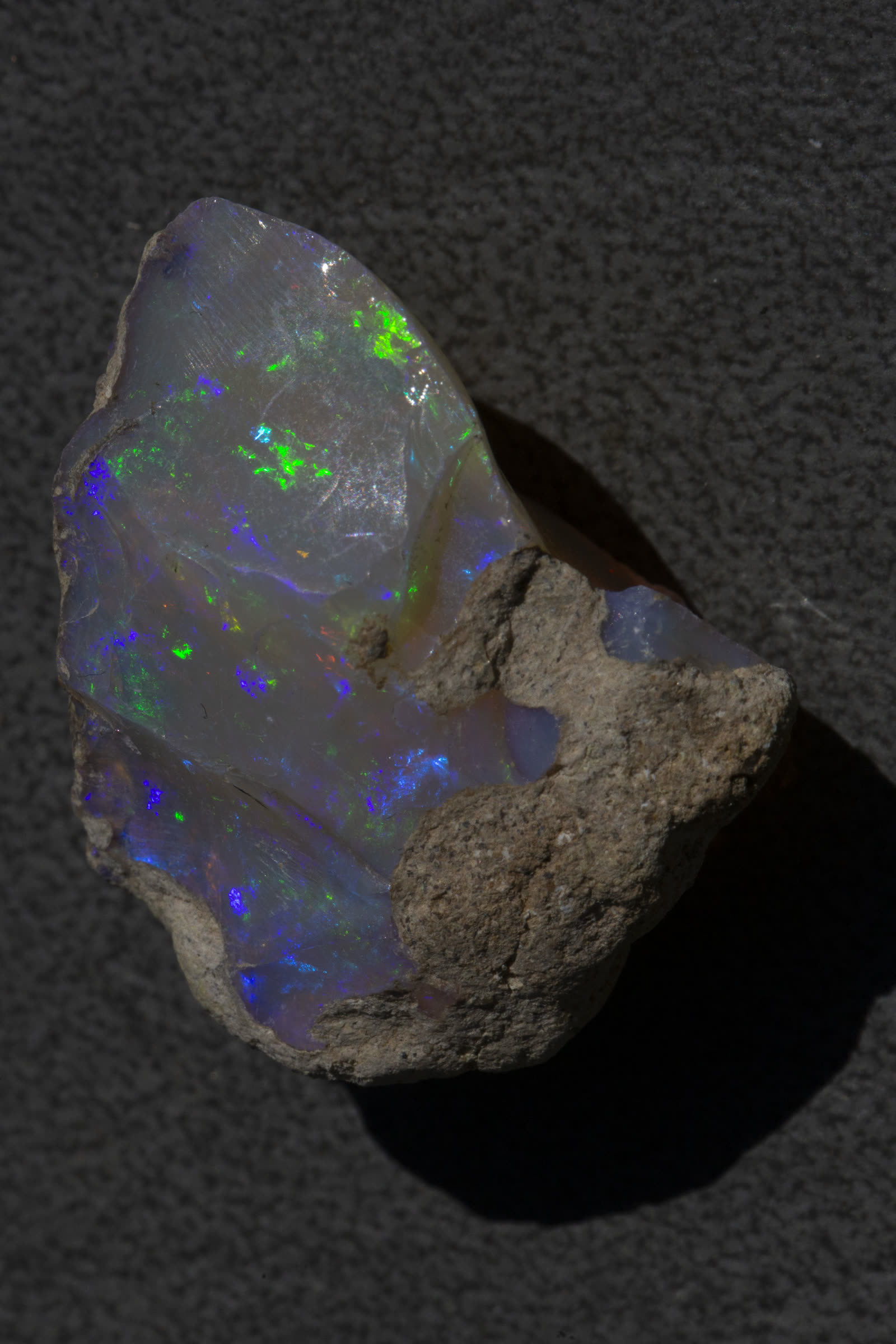
Opal is softer than the gems most jewelry is designed around. A setting approach that works fine for sapphire can fail with opal. Prong settings leave the stone exposed at the sides and vulnerable to chipping from impact. They also concentrate stress on the contact points between the metal and the stone. Bezel settings — where the metal wraps around the perimeter of the stone — distribute that stress more evenly and protect the girdle edge. For opal in a ring, bezel is almost always the better choice.
Heat is the other issue. Traditional jewelry techniques — soldering, annealing — require getting metal hot. Opal doesn't handle heat well; thermal shock can crack or craze a stone. A jeweler working with opal needs to set the stone after any heat work is done, not during it. If you're bringing an opal to a jeweler to be set, ask whether the metalwork is complete before the stone goes in. If the answer is no, find someone else.
Wire wrap as an alternative
Wire wrapping sets the stone cold — no heat, no prongs, no bezel that has to be soldered in place. The wire holds the opal mechanically rather than through a heat-formed setting. For unusual shapes and freeform cabs, wire wrapping often produces better results than trying to force the stone into a conventional setting design. It's slower to do well than a cast setting, but for the stone it's the gentlest possible approach.