The camera problem
Every opal photo lies a little. Here's what a camera can't capture and why it matters when you're buying.
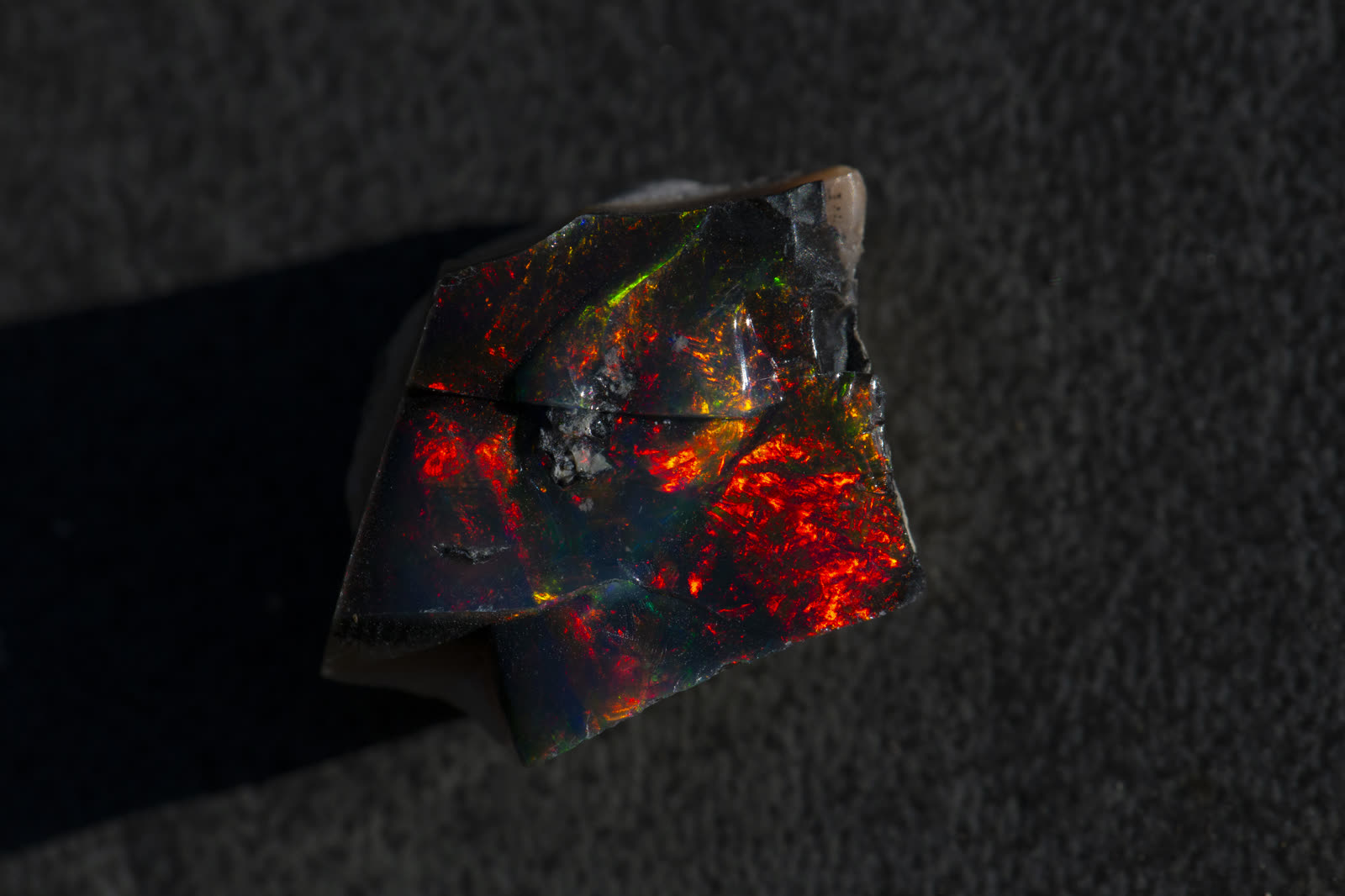
Play-of-color is defined by movement. The fire shifts as the stone moves, as the light source changes, as your eye changes angle. A photograph is a single frozen frame — one angle, one light position, one fraction of a second. It shows you what colors are present in that moment. It doesn't show the sweep of the red as the stone tilts, the green zone that appears at a different angle, the way the whole color map reorganizes as the stone rotates. That motion is what you're actually buying when you buy an opal.
Camera sensors also capture red and orange differently than the human eye does, in a way that tends to compress or shift the most vivid opal fire. What you see in a photo of a strong red-dominant piece is real, but flatter than the stone in hand. The gap between photo and reality is consistent enough to be worth accounting for — the stone is typically better than it photographs, not worse.
What to ask for instead
Ask for a short video clip, rotated slowly in diffuse natural light. A video shows you the sweep of the play-of-color and the body tone more honestly than staged photography can. Photos tell you what colors exist. Video tells you how they move. Neither replaces holding the piece in your hand — but video is considerably closer.