What opal costs and why
The price range in opal is enormous. Here's what actually drives value and what to look for at any budget.
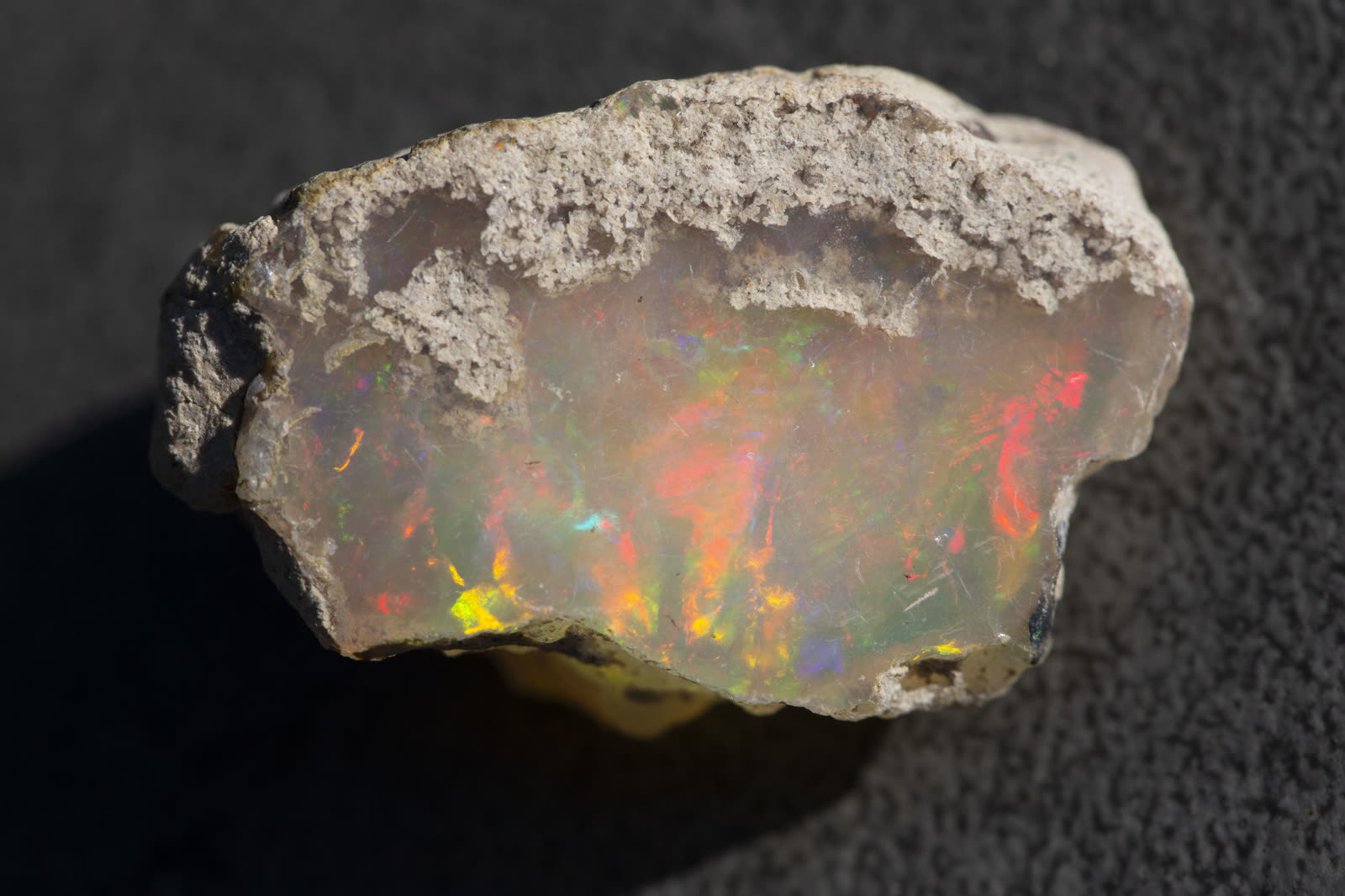
Opal pricing spans a wider range than almost any other gem. A doublet from a tourist market is a few dollars. A fine Lightning Ridge black opal in a significant size can be tens of thousands. The factors driving that range: body tone (black and dark body commands the highest premiums), brightness of the play-of-color, color range (red-dominant stones carry a premium because red requires the most precisely ordered silica spheres), pattern quality, coverage (what percentage of the face shows color versus dead zones), and size.
Origin matters too, but not in the way people expect. Australian material isn't automatically better than Ethiopian — the types are different, not ranked. A fine Ethiopian crystal with broad red fire is more valuable than a mediocre Lightning Ridge stone with patchy color. What origin tells you is what kind of stone you're dealing with: the body tone range, the stability profile, the typical cutting approach.
What to prioritize at any budget
At any price point, prioritize color coverage and brightness over size. A smaller stone where the color runs edge to edge is more valuable than a larger stone where the center fires and the edges are dead. Play-of-color that's visible from across the room — that reads from distance — is the trait worth paying for. Size looks good in photos. Brightness looks good everywhere.