The hydrophane test
Ethiopian opal absorbs water. Here is what that means for care, and how the same property exposes one of the market's most common frauds.
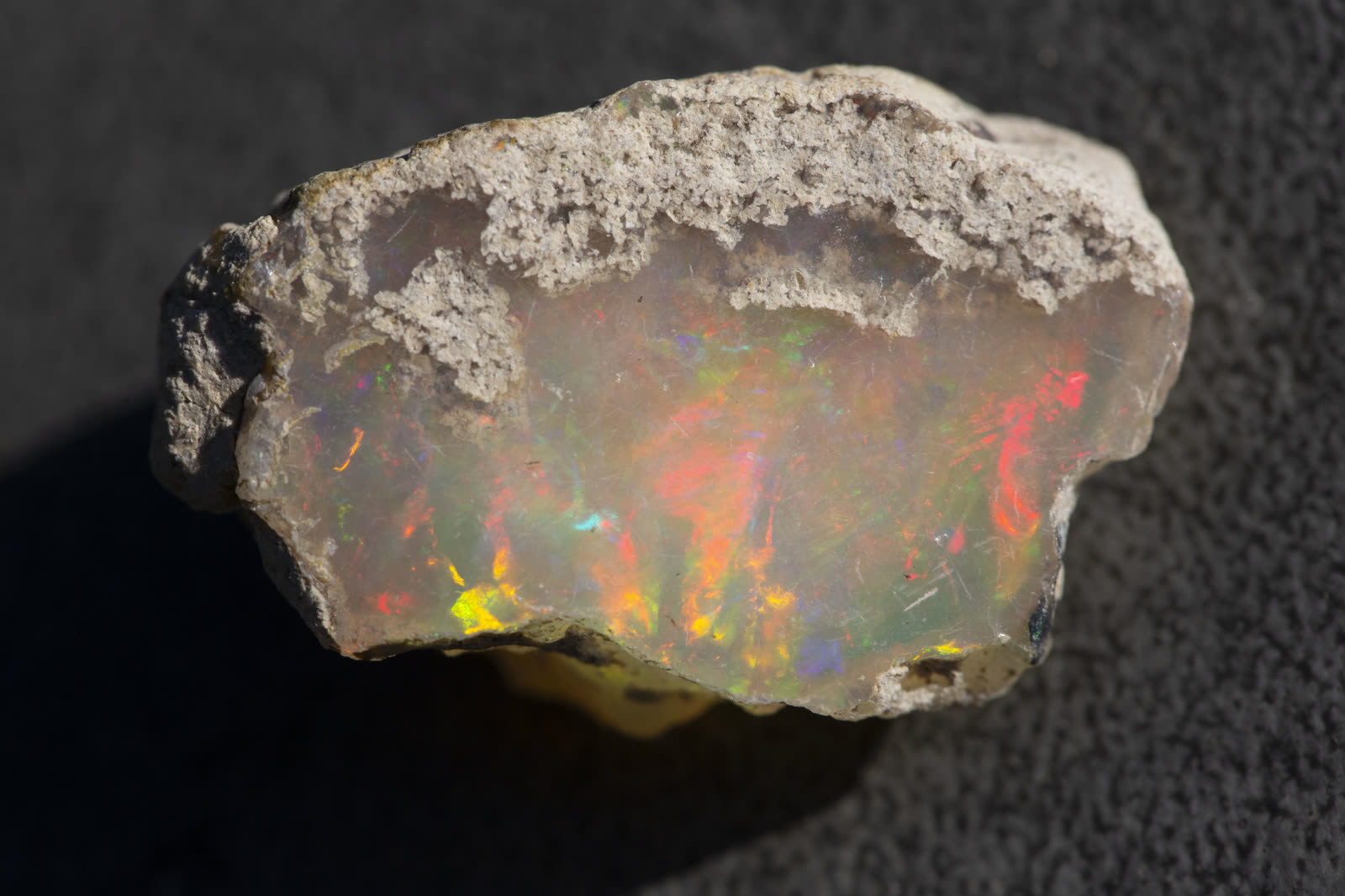
Hydrophane means water-appearing. Ethiopian opal from the Welo region is largely hydrophane — the silica structure has micro-pores that absorb liquid. When you immerse a hydrophane stone in water, the liquid fills the pores and changes the refractive index inside the stone. The visual effect ranges from subtle to dramatic depending on the piece: some stones go nearly transparent. Remove them and let them dry, and they return to their original appearance.
The test is simple. Drop the stone in a glass of clean water and wait a few minutes. Watch what changes. The stone becomes more transparent as water enters the pores. Color may shift slightly. Play-of-color often becomes more vivid temporarily. Remove and dry on a soft cloth — it returns to its original look as the water slowly outgases over the following hours.
Why this matters for smoked Ethiopian
The hydrophane property is what makes the water test the primary tool for detecting smoked Ethiopian opal. A smoked stone — one that has been fraudulently darkened by exposing it to carbon from burning organic material — loses most or all of its dark appearance when immersed. The water displaces the carbon in the pores, turning the stone light or translucent. Natural dark-body Ethiopian does not change, because the body tone is in the crystal structure of the stone, not in the pores. Dry the stone and re-test if there is any doubt.
Care implication: oils, perfumes, and lotions can enter the pore structure of hydrophane opal and are harder to remove than water. If a Welo stone gets contaminated with skin lotion or fragrance, the color can appear temporarily clouded or shifted. A soak in clean water and slow drying usually clears it. Keep Ethiopian opal away from body products.