The Nevada dome
The biggest piece we've pulled from Virgin Valley lives in water permanently. Here's what's inside it — and why it will never be cut.
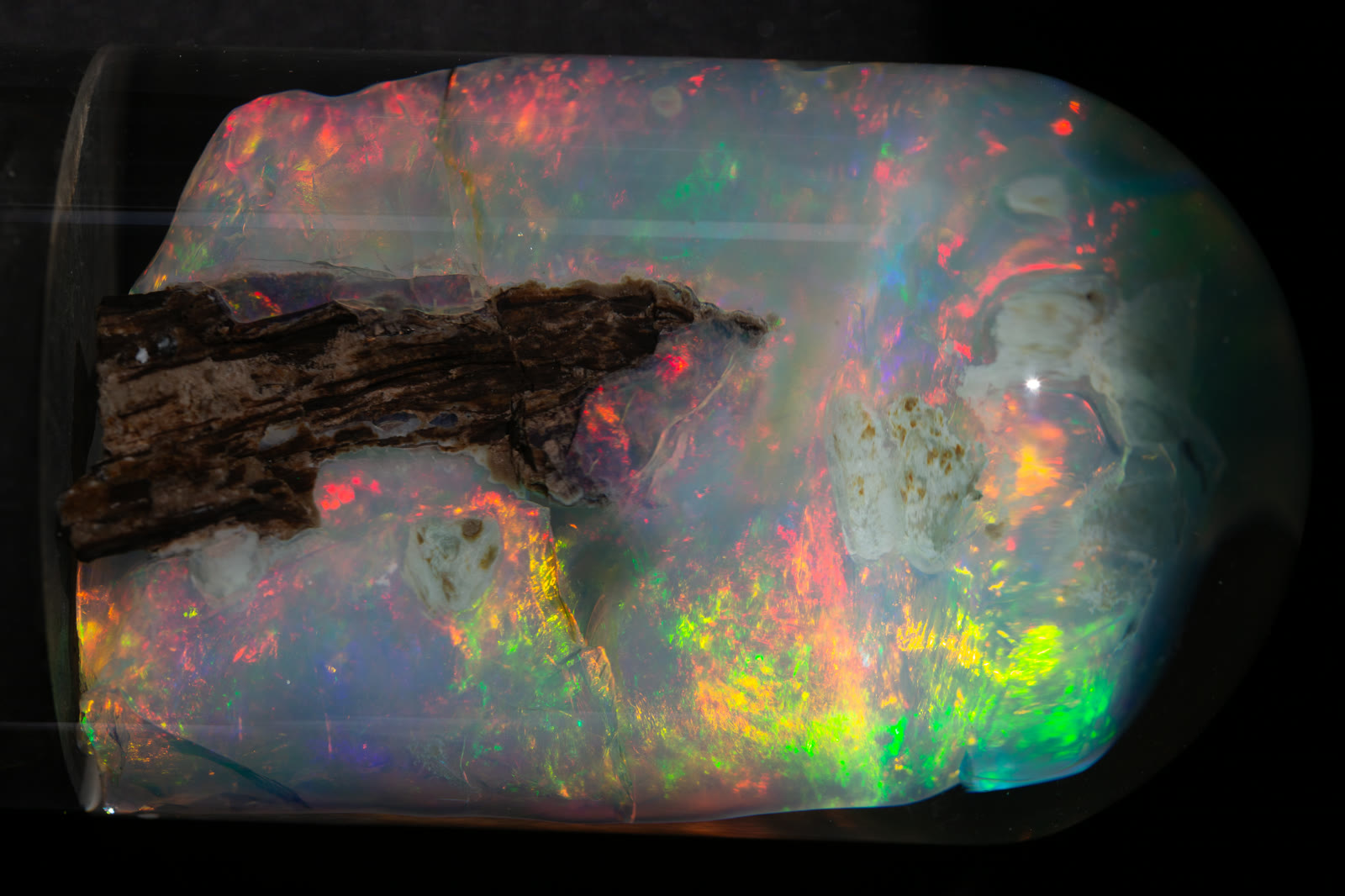
We found the blue in the dirt. That's the short version. What happened next belongs to Glen Hodson — Rainbow Ridge's owner, one of the most experienced Virgin Valley diggers alive — who spent the better part of an afternoon slowly coaxing the piece out of the surrounding bentonite by hand. You don't rush that process. The opal and the clay have been together for millions of years. The clay doesn't want to let go, and if you force it, the opal pays the price.
We got the leftovers from the dig. Glen kept the main piece, which is his right and his due — he found it, he freed it, and he's the one who knew what to do with it next. The photos here, and the full documentation of the dig, were shot by photographer Mark Martucci, who captured the whole sequence. See the dig post for the complete story.
What Glen did next
While we were sipping celebratory whisky, Glen cut and glued it. That's not a figure of speech — stabilization with resin adhesive is how you work with Virgin Valley material at all. The opal is full of water from its millions of years in wet bentonite. Expose it to dry air and the silica network dries unevenly; some zones contract faster than others; the differential tension crazes the stone. Glen's technique involves bonding the piece so the structure is locked before any cutting begins.
Why it will never be cut
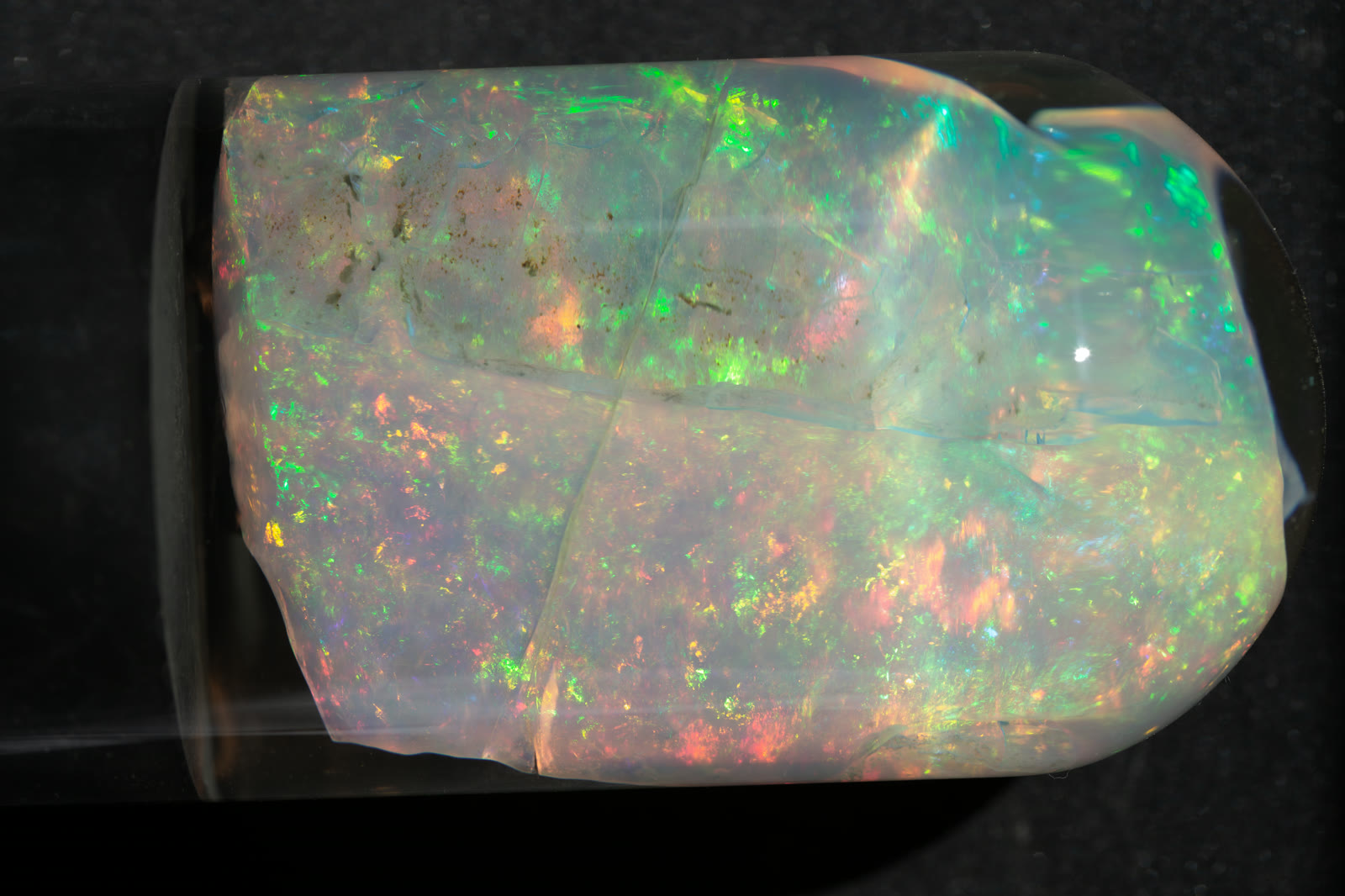
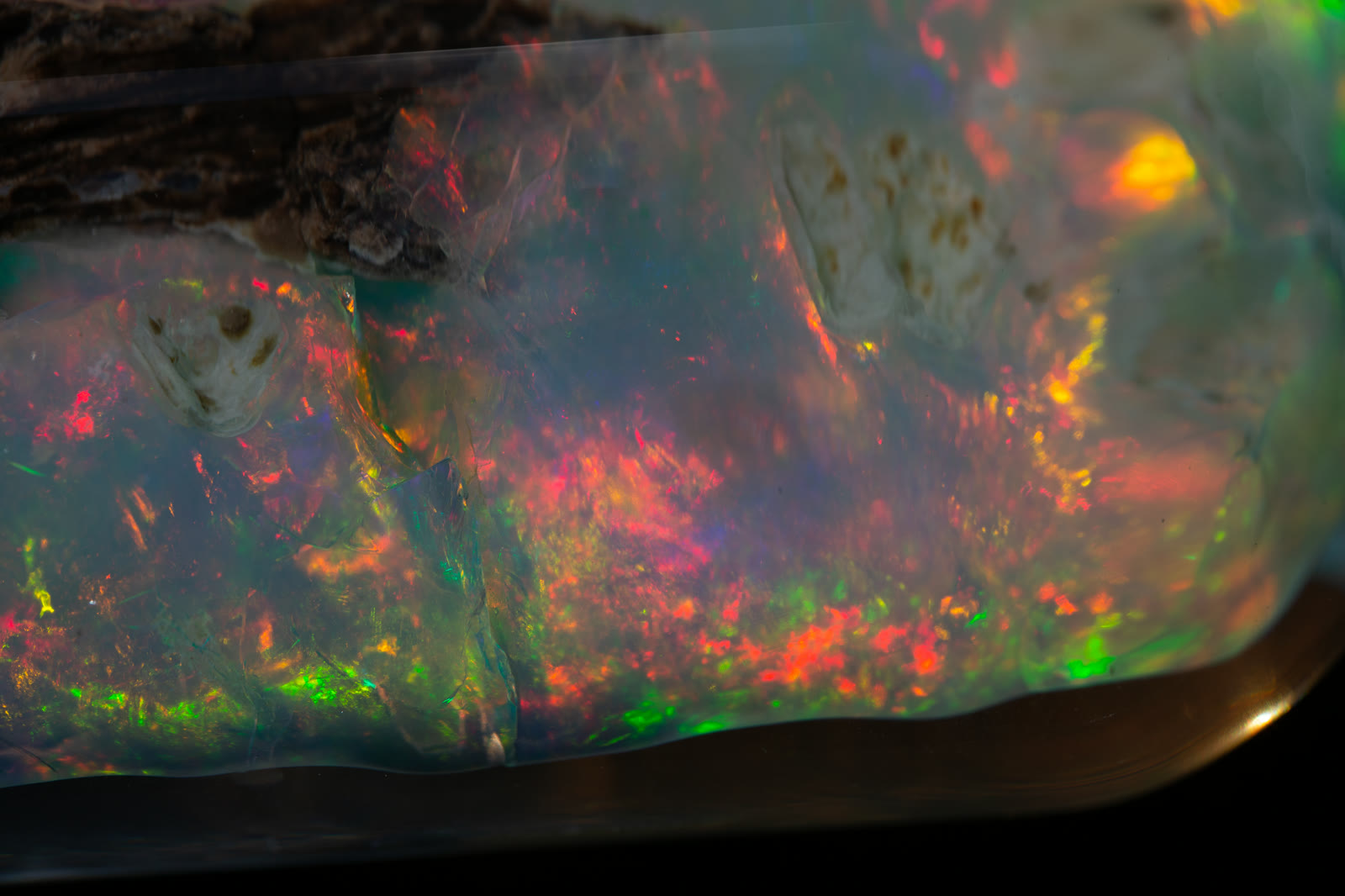
This is a specimen piece. Virgin Valley opal carries roughly 15–20% or more water by weight — built into the silica structure, not sitting on the surface. Ethiopian gem opal runs around 5–8%, which is part of why it's cuttable. That water is structural: it fills the gaps between the silica spheres that produce the play of color. Cut a Virgin Valley piece, expose it to air, and the water escapes unevenly. Some zones dry faster than others. The differential contraction creates internal tension — and that tension crazes the stone, or cracks it outright. Stabilization with UV glue or plastication reduces the risk enough to display a piece, but doesn't eliminate it. It locks structure; it doesn't lock moisture.
Formation matters too. This opal formed in bentonite clay — the wetter the clay at formation, the higher the water load, and the longer it needs to equilibrate before it's remotely stable. Crystal opal pulled from a fresh load almost never fully stabilizes: it's still carrying the full moisture of the deposit. Tailings material is different. Pieces that end up in the tailings pile go through years of slow, controlled drying in a lower-moisture environment. That extended exposure is the closest thing to natural stabilization Virgin Valley opal gets. Fresh-dug material — like the dome piece — lives in water. It will stay there.
Glen freed it from the ground. The whisky was ours. The credit is his.