Welo, Ethiopia: where the fire lives
Most of the gem world learned Ethiopian opal existed around 2008. Here's where it actually comes from — and what makes it different from everything else.
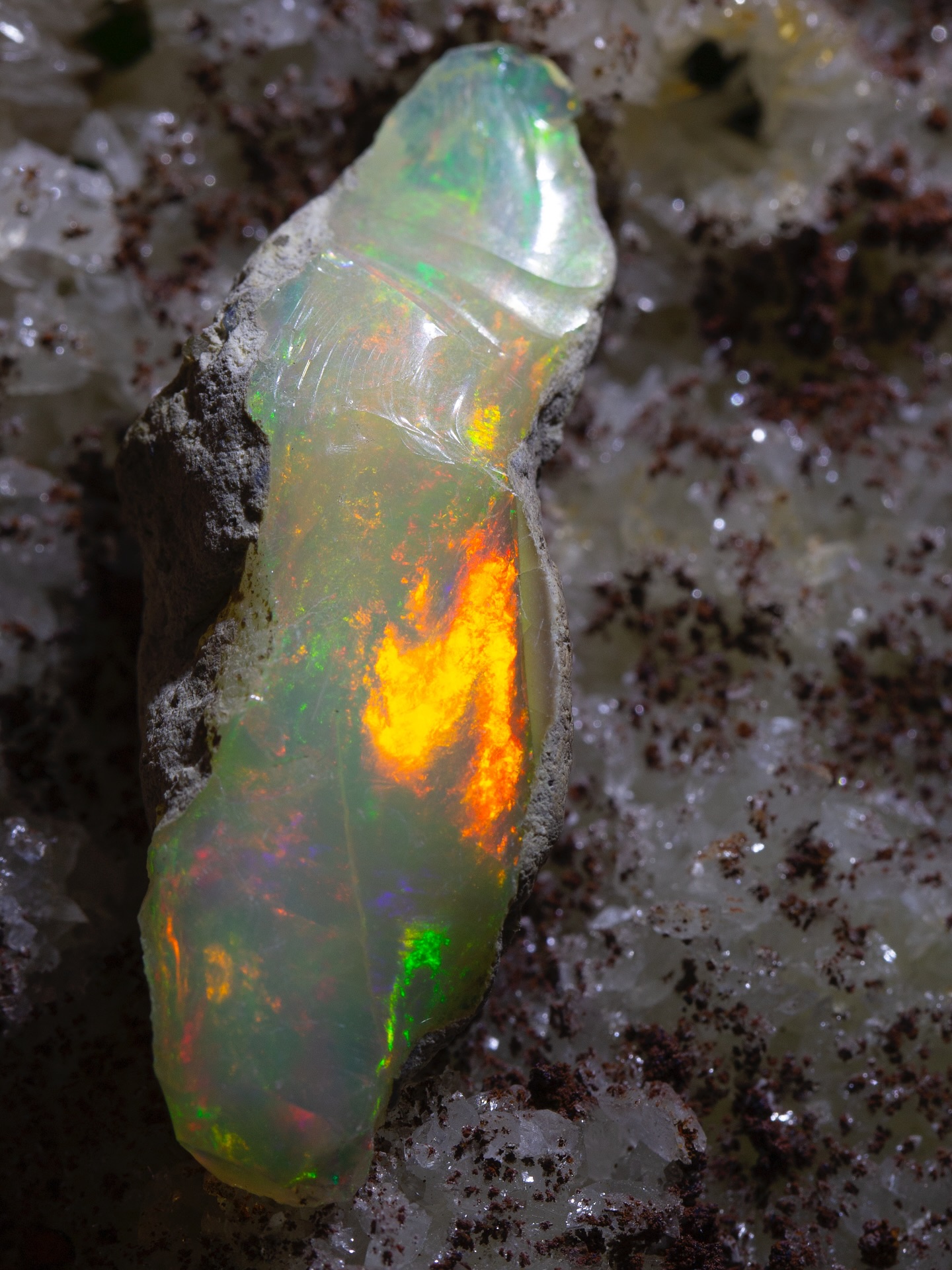
Most of the gem world learned Ethiopian opal existed around 2008, when material from the Welo district started moving in real volume. Before that, 'opal' meant Australia to serious buyers. The Ethiopian material changed the market fast — and it's still changing how people think about what opal can be.
Welo opal forms differently from Australian opal. In Australia, opal replaces fossils and fills horizontal seams deep in sedimentary rock — the classic Lightning Ridge black opal, the Queensland boulder material in ironstone. Ethiopian opal formed in volcanic rhyolite, where silica-rich solutions infiltrated irregular voids and pockets over millions of years. Geologically more recent, and closer to the surface.
What makes it different
The result is material unlike anything from Australia: crystal-clear to slightly foggy base body, color that fires in multiple directions at once (it formed in irregular pockets, not flat seams), and the hydrophane property — a micro-porous silica structure that absorbs water. Press a dry piece to your lip and it sticks. Get it wet and it glows.
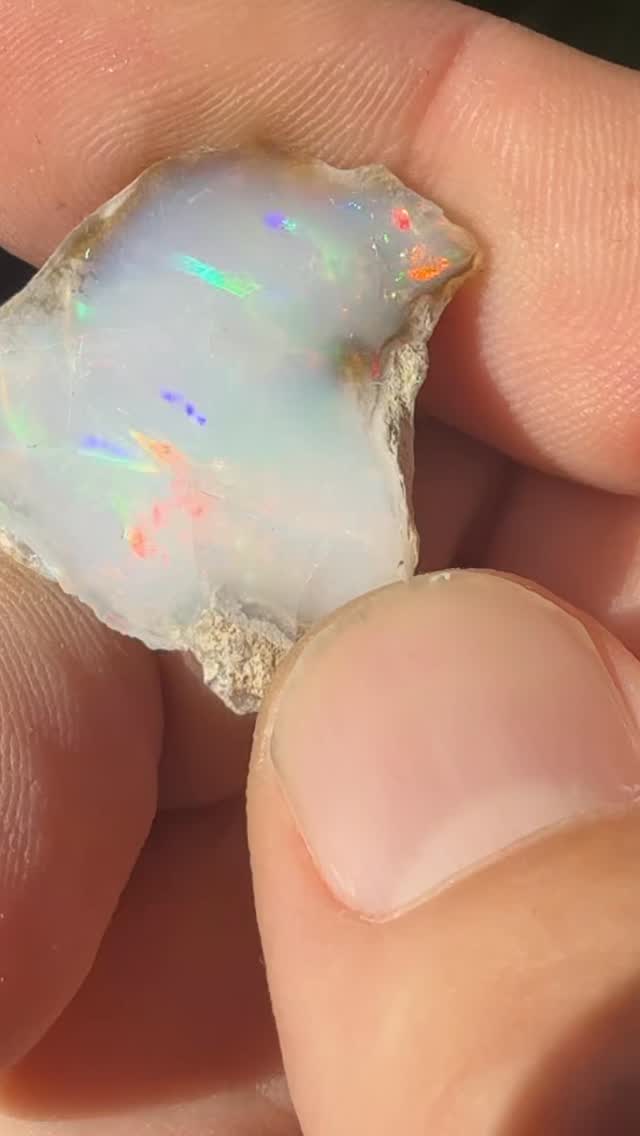
The garnet shows up mixed into Welo rough regularly. The same volcanic geology that produced the opal produced the garnet. Different stones, same origin story.
How we source it
Ethiopian opal sourcing has real questions attached. Artisanal mining conditions in the Welo region are not uniformly good, and the supply chain can be opaque if you're not careful about who you buy from. The material we work with comes through sellers we've dealt with for years, who can name the specific region and verify export compliance. We don't source blind.
The piece at the top of this post weighs just under 200 grams rough. The color fires through the entire body — green, orange, and flashes of red depending on the angle. Pieces like that are why we keep coming back to Ethiopian material.
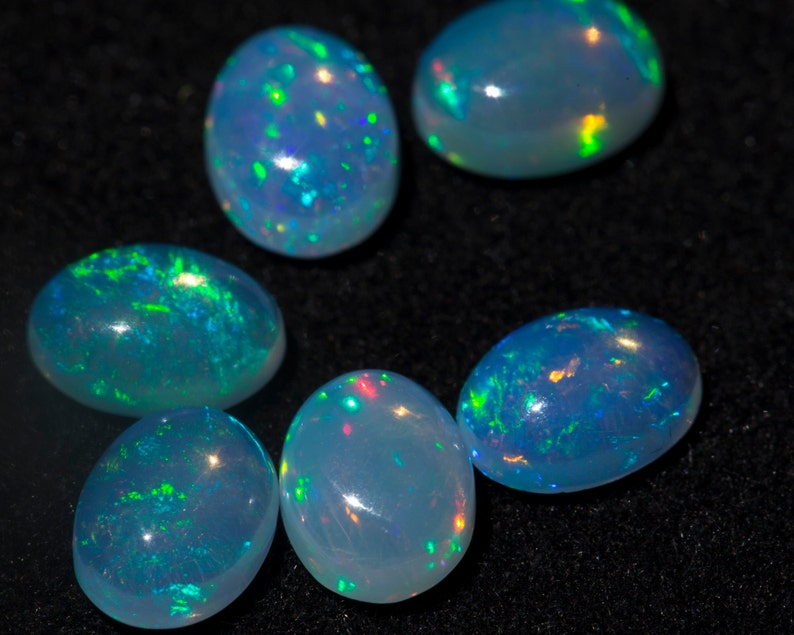
The fire isn't on it. It's inside it.