What opal actually is
Opal isn't a crystal. It isn't a mineral in the usual sense. Here's what the silica is actually doing.
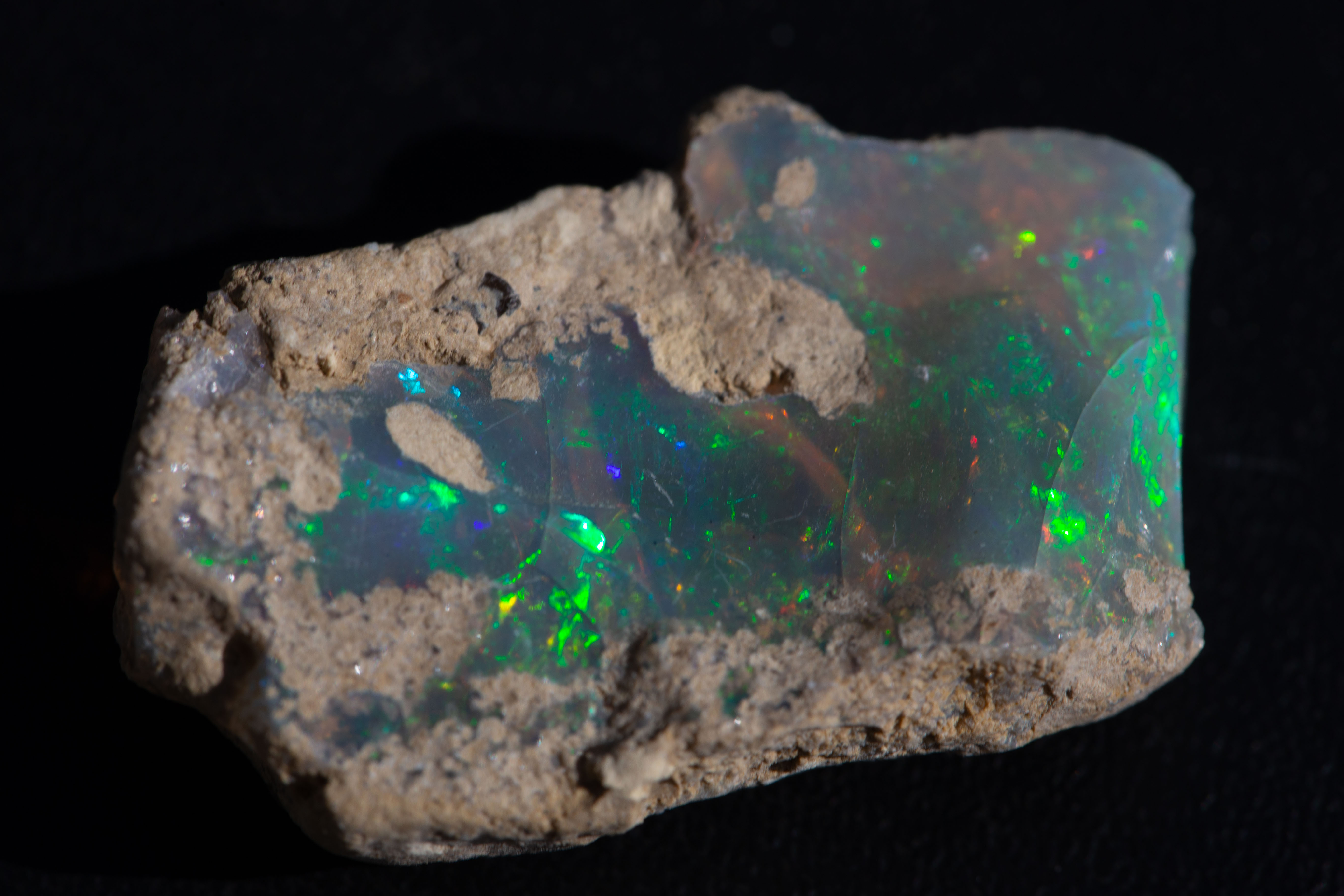
Most gemstones are minerals — ordered crystalline structures with a repeating atomic lattice. Opal isn't. It's amorphous hydrated silica: SiO₂ with water bound into the structure. No long-range crystal order. Which is part of why it behaves so differently from everything else on the bench.
The play-of-color — the phenomenon that makes opal look the way it does — comes from a structure that forms during opal's deposition. As silica gel slowly accumulates in voids in the host rock, it can form closely packed spheres of uniform size. When those spheres are the right size and stacked in a consistent enough pattern, they act as a diffraction grating for visible light. Different sphere sizes diffract different wavelengths. The color you see is determined by the sphere diameter.
Why it crazes
The water in opal isn't surface moisture — it's bound into the silica structure. Precious opal from most deposits runs 6–10% water by weight. Virgin Valley material runs much higher. That water is structural: remove it too fast and the silica network contracts unevenly. The differential stress cracks the stone. That's crazing — not a defect in the stone so much as a consequence of the chemistry of what opal actually is.
Understanding what opal is made of explains most of its behavior on the bench: why it needs slow, cool cutting, why it can't handle ultrasonic cleaners, why Virgin Valley material lives in water, why Ethiopian hydrophane changes color when wet. The chemistry runs all the way through.