What play-of-color actually is
The rainbow in an opal isn't pigment and it isn't a trick of polish. It's geometry, a few hundred nanometers at a time.
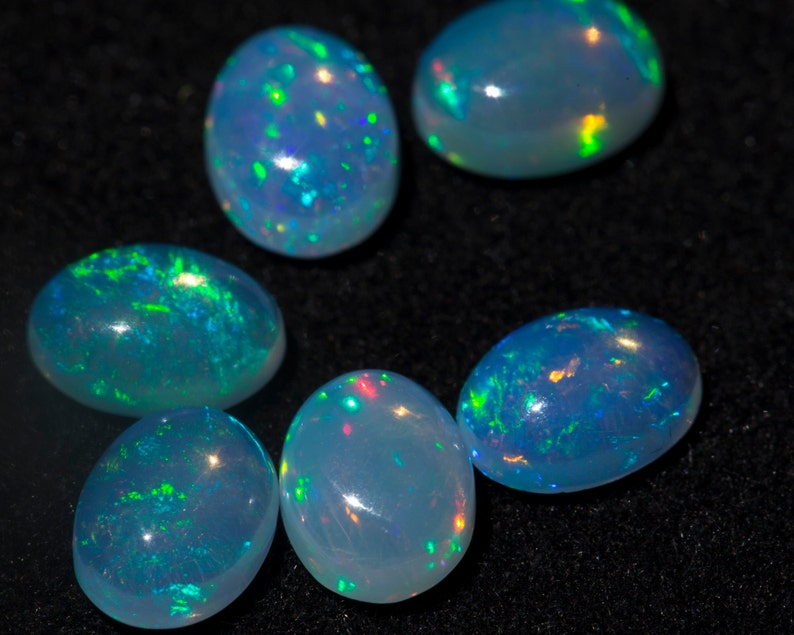
People ask what the colors in an opal are made of, and the true answer surprises them: nothing. There's no pigment in there. Precious opal is silica and water — the same silica as ordinary sand — arranged in spheres so small you'd line up a few thousand of them across a human hair.
When those spheres happen to be all the same size and stacked in a neat grid, they act like a diffraction grating: white light goes in, gets split, and specific colors come back out depending on the sphere size and the angle you're holding the stone. Small spheres give you blues and greens. It takes larger, rarer spheres to send back red — which is why a strong red flash usually costs more.
Why the dark stones shout
Body tone is the other half of it. The same play-of-color reads completely differently on a dark body than a light one — dark potch behind the color works like a velvet tray under a gem, swallowing the stray light so only the diffracted color reaches your eye. That's the whole reason Lightning Ridge black opal commands what it does. The color isn't necessarily stronger; the stage is just darker.
And this is why we cut the way we do. Orienting a stone is deciding which angles the color fires at. A few degrees of difference in how the dome sits over the color bar decides whether a stone flashes at the person wearing it or at their shoes. Twenty years in, that judgment call is still the best part of the job.
If you want the working vocabulary — pinfire, broad flash, rolling flash, harlequin — we keep a plain-English glossary on the Learn page. None of it is marketing. It's how cutters actually talk to each other.