Why we list the cracks
Every listing we write names the sand, the cracks, the matrix. Here's why we'd rather lose a sale than skip that paragraph.
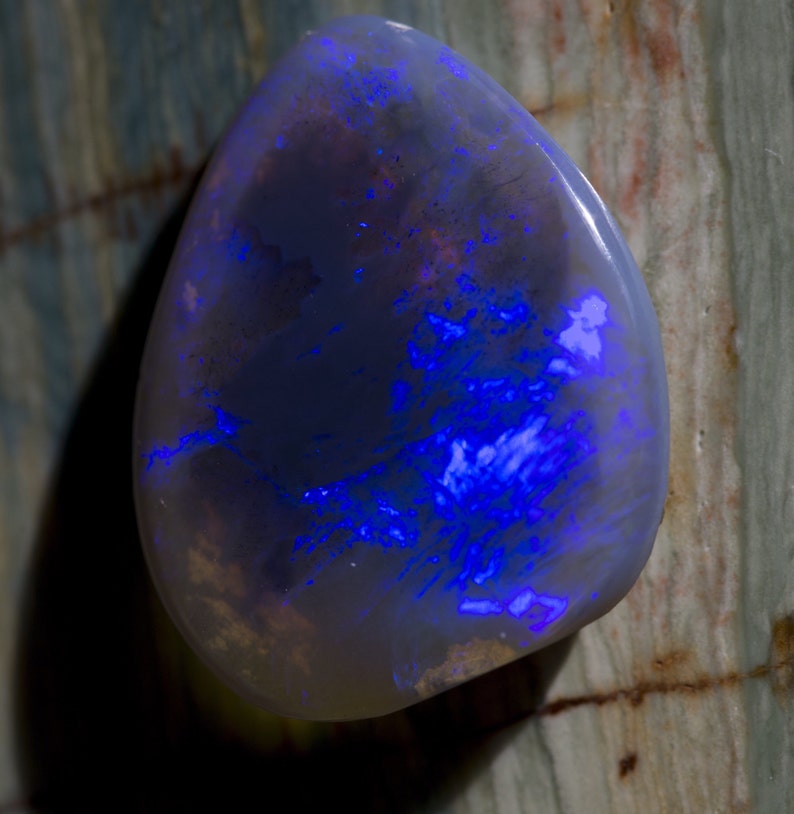
Read a few of our Etsy listings and you'll notice a pattern: after the weight and the measurements, there's always a line about what's wrong with the stone. Sand inclusions. A surface-reaching crack at one end. Matrix showing on the back. If a piece has no play-of-color, the listing says NO Fire in capital letters so nobody can miss it.
That's not modesty — it's the whole business model. A photo can be lit to hide almost anything, and in this trade plenty are. But opal buyers tend to come back for decades, and nobody comes back to a seller who let them discover a crack on their own. Eleven years and 917 reviews on Etsy say the disclosure paragraph is the best marketing we never wrote.
A flaw is information
There's also a quieter reason. Sand and matrix tell you the stone is real and tell a cutter how it formed — a fossil opal full of sand is still a sixty-million-year-old piece of wood replaced by mineral, and that's worth holding regardless of what a grader would score it. We'd rather describe a stone completely and let you decide what it's worth to you.
So when you read one of our listings, the flaw paragraph isn't the fine print. It's the handshake.