What you see in the rough
Evaluating an uncut opal is a skill. Here's how to read a piece before the wheel touches it.
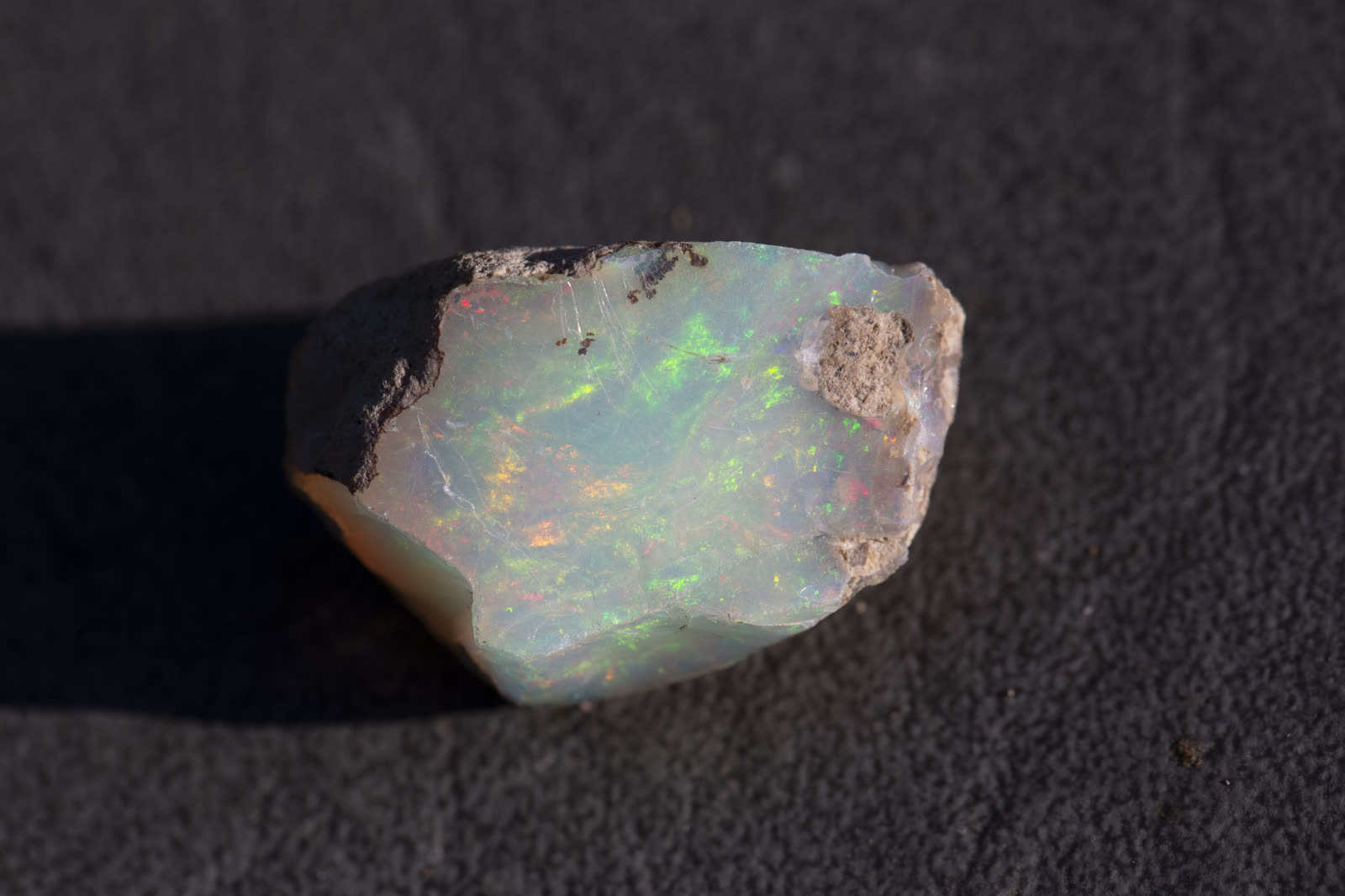
The piece in the photo hasn't been touched yet. That's intentional. Before anything goes near a lap or a diamond bur, you spend time with it — turning it in different light, looking at the edges, mapping where the color runs and where it doesn't.
What you're reading: the color bar. In Ethiopian crystal opal like this, the play-of-color is usually in a distinct layer or zone. The fire you can see on the surface is a window into it. Watch where it's dense versus thin, where it crosses a flaw line, whether it runs all the way to the edge or dies out partway. The cuts that waste the most material are the ones made without looking first.
What the matrix tells you
The dark matrix attached at the back isn't just leftover rock — it's information. The way the opal formed inside it, the angle it sits at, where the contact surface is: all of that tells you something about where to start the preform. On this piece, the color runs roughly parallel to the top face. That's useful. It means a conventional cab shape is probably workable without chasing the color bar at an awkward angle.
The other thing the matrix tells you is depth. If the color bar is thick, you have room to dome the cab. If it's thin — two or three millimeters — you're cutting a low dome or you're not cutting it at all. You find that out before you start, not halfway through.