When a cab is finished
The test for a finished cab is a point source of light and a loupe. Here is what you are looking for.
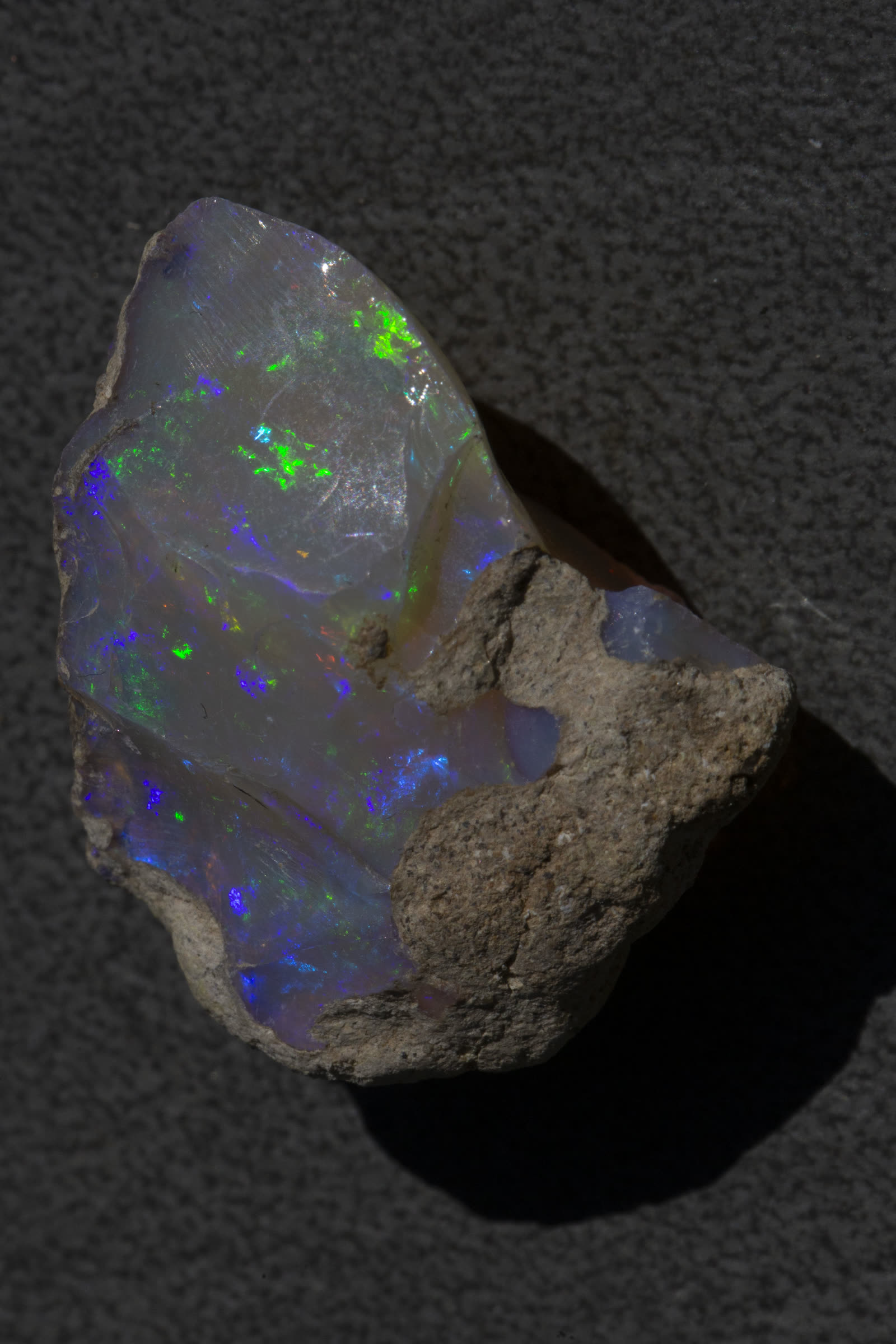
Hold the finished stone near a single-point light source — not diffuse light, a focused lamp — and rotate it slowly while looking through a loupe at 10x. Any remaining surface scratches appear as bright lines when the stone rotates to catch the light at the right angle. If you see lines, identify which grit left them and go back to that stage. If you see none, the polish is done.
Dome evenness is the second check. The dome should rise consistently from the girdle to the crown without flat spots or high points. A flat center usually means too much time on the wheel at the edges early in the grind. A high center means too much time in the middle. Either affects how the stone sits in a bezel — an uneven dome rocks in the setting rather than seating flat against the base.
Girdle and symmetry
Check the girdle edge for chips under magnification. The edge where dome meets girdle is the most vulnerable spot on an opal cab — the geometry change creates a stress point, and the final polishing passes can catch and chip it if the wheel speed is wrong or the angle isn't controlled. A chipped girdle on an otherwise finished stone is difficult to fix without resetting the dome.
Symmetry: the outline of the finished cab should match itself when viewed from directly above and flipped. For commercial oval cabs, symmetry matters because the stone will be set in a symmetric mounting. For freeform work, intentional asymmetry is different from accidental asymmetry from inconsistent wheel pressure. The distinction is usually obvious. One reads like a decision; the other reads like a mistake.